
Most conversations about the microbiome focus on the gut. And that makes sense — your gut microbiome influences everything from immune function and nutrient absorption to hormone metabolism and mood. But there's another microbial community that rarely gets the spotlight it deserves, and it lives in your vagina.
Your vaginal microbiome is a distinct ecosystem of bacteria, and the balance of that ecosystem has a surprisingly large influence on your hormonal health, your fertility, and your protection against chronic reproductive infections. Understanding it — and learning how to support it — can change the way you think about your entire cycle.
What Is the Vaginal Microbiome?
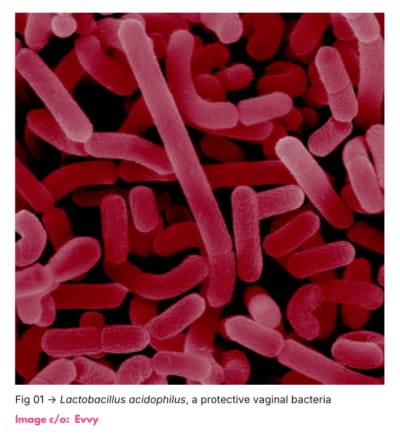
The vaginal microbiome is the community of microorganisms that live in and around the vaginal canal. Like the gut, this ecosystem contains a mix of commensal bacteria (essentially harmless residents), mutualistic bacteria (microbes you've developed a beneficial relationship with), and opportunistic pathogens that need to be kept in check.
What makes the vaginal microbiome fundamentally different from the gut microbiome is this: diversity is not the goal here. In gut health, we generally want a wide variety of bacterial species — that diversity is a marker of resilience. But a healthy vaginal microbiome is actually characterized by low diversity and high dominance of one particular genus: Lactobacillus.
Several Lactobacillus species — most notably L. crispatus, L. iners, L. jensenii, and L. gasseri — protect the vaginal environment by producing lactic acid. This keeps vaginal pH low, typically between 3.8 and 4.5, creating an acidic environment that is inhospitable to harmful bacteria, yeast, and certain sexually transmitted infections. Think of Lactobacillus as the primary protective barrier of your reproductive tract.
When Lactobacillus populations drop and other bacterial species — particularly anaerobic bacteria like Gardnerella, Prevotella, and Mobiluncus — take over, the vaginal environment shifts. pH rises, the protective acid barrier weakens, and the stage is set for recurrent infections, inflammation, and a cascade of downstream reproductive health consequences.
How Hormones and Your Cycle Shape Vaginal pH
Here's where it gets interesting for anyone who menstruates: your vaginal microbiome is not static. It shifts throughout your cycle in direct response to your hormones — particularly estrogen.
Estrogen stimulates the production of glycogen in vaginal epithelial cells. Lactobacillus species use that glycogen as their primary fuel source, converting it to lactic acid. So when estrogen is high — as it is in the follicular phase and around ovulation — Lactobacillus thrives, glycogen is abundant, and vaginal pH stays protective and low.
During menstruation, blood raises vaginal pH temporarily. In the early follicular phase, estrogen is still climbing and pH can fluctuate. Around ovulation, the environment is typically at its most acidic and Lactobacillus-dominant. Then in the luteal phase, as both estrogen and progesterone are present, the vaginal environment tends to be relatively stable — though progesterone does modify the picture compared to the high-estrogen follicular phase.
What this means practically: the women most vulnerable to vaginal dysbiosis tend to be those with low estrogen. This includes women in perimenopause and menopause, women with hypothalamic amenorrhea or undereating, and women coming off hormonal birth control as their natural estrogen production reestablishes itself. Your cycle also affects your gut in a similar way — the hormonal fluctuations that shift your vaginal environment are affecting your entire digestive and immune landscape simultaneously.
What Bacterial Vaginosis Actually Is — and Why It Keeps Recurring
Bacterial vaginosis (BV) is the most common vaginal condition in women of reproductive age, affecting roughly one in three women at some point. Yet it is profoundly misunderstood. It is not a sexually transmitted infection. It is a microbial imbalance — specifically, the overgrowth of anaerobic bacteria in a vaginal environment where Lactobacillus has been depleted or crowded out.
The classic symptoms are a thin, greyish-white discharge with a fishy odor, particularly noticeable after sex (when semen, which is alkaline, temporarily raises vaginal pH). Some women have no symptoms at all, which is why BV is frequently discovered incidentally during a routine swab.
The reason BV keeps recurring for so many women is that antibiotics treat the overgrowth but do nothing to restore the Lactobacillus population. Metronidazole clears the anaerobic bacteria responsible for the imbalance, but unless you actively repopulate Lactobacillus, the vaginal environment stays primed for the same opportunistic bacteria to return. Many women cycle through antibiotic courses for months or years without ever addressing the root cause: a depleted and insufficiently supported Lactobacillus community.
Compounding this, antibiotics have a well-documented impact on the broader microbiome, including the gut flora, which further weakens the ecosystem your vaginal health depends on. Rebuilding after antibiotics requires targeted, intentional effort — not just waiting for things to normalize on their own.
The Vaginal Microbiome and Fertility
One of the most compelling emerging areas of research involves the relationship between vaginal microbiome composition and fertility outcomes — including IVF success rates.
The endometrium (uterine lining) has its own microbiome, and the vaginal microbiome significantly influences it. Studies have found that women with Lactobacillus-dominant vaginal and endometrial microbiomes have substantially better IVF implantation rates compared to women whose microbiomes are characterized by non-Lactobacillus-dominant communities. One particularly striking finding: women with less than 90% Lactobacillus dominance in the endometrial microbiome had significantly lower clinical pregnancy and live birth rates.
BV and vaginal dysbiosis have also been associated with increased risk of preterm birth, miscarriage, and pelvic inflammatory disease (PID) — all of which underscore why the vaginal microbiome is not a minor footnote in reproductive health. It belongs front and center in any conversation about fertility, pregnancy preparation, and recurrent pregnancy loss.
What Is Vaginal Microbiome Testing?
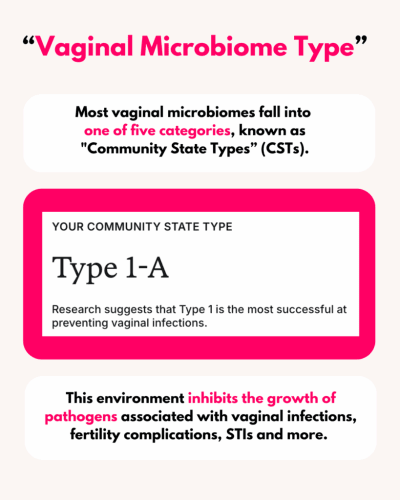
Vaginal microbiome testing is a way to get a detailed picture of what bacterial species are living in your vaginal ecosystem — their identities, their relative abundance, and how that composition compares to an optimal Lactobacillus-dominant profile.
At-Home PCR-Based Microbiome Panels
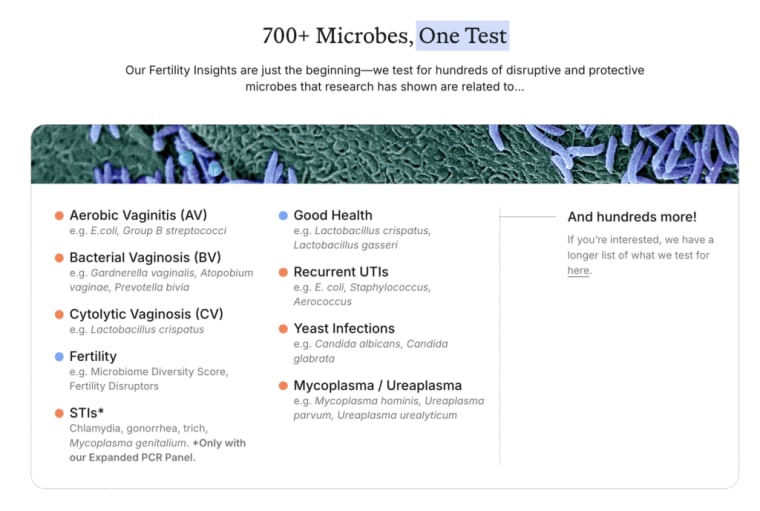
A growing number of at-home vaginal microbiome tests use PCR (polymerase chain reaction) technology or next-generation sequencing (NGS) to identify and quantify hundreds of microbial species from a simple self-collected vaginal swab. These tests typically mail you a collection kit, you swab at home (usually just inside the vaginal opening), seal the sample, and mail it back to a laboratory.
Results from these panels are far more detailed than a standard clinical culture. They can tell you not just whether Gardnerella is present, but which specific species of Gardnerella, at what relative abundance, and how your overall Lactobacillus profile compares to research norms. Some panels also test vaginal pH directly and assess for specific pathogens like Mycoplasma, Ureaplasma, and Candida species.
For women dealing with recurrent BV, recurrent yeast infections, unexplained fertility challenges, or chronic pelvic discomfort, this level of detail can be genuinely illuminating. It shifts the question from "do I have BV again" to "what is actually living in my vaginal ecosystem, and why isn't Lactobacillus thriving?"
Clinical Vaginal Swab Cultures
Standard vaginal cultures ordered through a physician's office test for specific known pathogens — most commonly Candida, Trichomonas, and the anaerobic bacteria associated with BV. These tests are useful for confirming an active infection and guiding antibiotic selection, but they are not comprehensive microbiome assessments. A clinical culture can come back "negative for BV" while you still have a significantly disrupted Lactobacillus profile that makes you vulnerable to recurrence.
Some functional medicine and integrative gynecology practices now offer more comprehensive vaginal microbiome panels as part of a clinical workup, particularly for patients with recurrent infections or unexplained fertility challenges. These are worth asking about if you have a provider in that space.
What to Look For in Results
Regardless of which testing route you take, you're primarily looking for three things: the abundance and species of Lactobacillus present (with L. crispatus being the most protective species), the presence and relative abundance of any anaerobic dysbiotic bacteria, and your vaginal pH. A healthy result shows high Lactobacillus dominance (ideally 90% or greater), low or absent anaerobic bacteria, and a pH in the 3.8–4.5 range.
Not sure where your hormones stand?
Vaginal health doesn't exist in isolation — it's deeply connected to your estrogen levels, your cycle regularity, your gut health, and your stress load. The free Hormone Health Assessment gives you a personalized look at which areas of your hormonal health may need the most attention.
Take the Free Assessment →What Disrupts the Vaginal Microbiome
Understanding what knocks the vaginal microbiome off balance is just as important as knowing what a healthy one looks like. The most common disruptors include:
- Antibiotics. As discussed above, antibiotics are the single most common cause of vaginal dysbiosis. They are not selective — they deplete Lactobacillus populations just as effectively as they clear the bacteria they're targeting. Even a single short course can trigger a significant shift in vaginal flora that takes weeks to months to correct.
- Hormonal birth control. The synthetic hormones in oral contraceptives alter estrogen signaling in vaginal tissue, which affects glycogen production and therefore Lactobacillus fuel availability. Many women notice recurrent yeast infections or BV beginning or worsening after starting the pill — this is a well-documented connection, not coincidence.
- Douching and scented products. Douching introduces alkaline fluid into the vaginal canal, directly disrupting pH and washing away Lactobacillus. Scented feminine wipes, sprays, and washes do similar damage — the vagina is self-cleaning and the chemicals in these products irritate the vaginal epithelium and disturb the microbial balance. There is no hygiene benefit to any of them.
- Chronic stress. Stress hormones — particularly cortisol — suppress immune function and alter the bacterial landscape throughout the body. The gut microbiome research is clear on this: chronic stress produces shifts in bacterial populations that favor opportunistic pathogens over commensal bacteria. The same principle applies to the vaginal microbiome. Cortisol also suppresses estrogen production over time, indirectly reducing the glycogen available to Lactobacillus.
- High-sugar and high-refined-carbohydrate diets. Sugar and refined carbohydrates feed opportunistic organisms — Candida being the most familiar example. An environment with elevated glucose availability favors yeast and certain anaerobic bacteria over Lactobacillus. This is the same metabolic dynamic that drives gut dysbiosis: the organisms that thrive on sugar are rarely the ones you want dominating.
- Low estrogen states. Perimenopause, menopause, hypothalamic amenorrhea, significant undereating, and the immediate postpartum period all reduce estrogen levels, which reduces vaginal glycogen, which starves Lactobacillus. This is why vaginal atrophy and recurrent BV are so common in menopause — the microbial ecosystem is reacting to the estrogen shift.
- Semen and new sexual partners. Semen is alkaline (pH 7.2–8.0) and temporarily raises vaginal pH after sex. Exposure to a new partner's microbiome also introduces foreign bacteria that can compete with Lactobacillus. This is part of why BV risk increases with new or multiple sexual partners, though BV is not classified as an STI.
How to Support Lactobacillus Abundance
The good news: the vaginal microbiome is responsive. With the right inputs, Lactobacillus populations can reestablish and a healthy vaginal pH can return. This is not a months-long process requiring heroic intervention — it is largely about removing disruptors and providing consistent nutritional and probiotic support.
Targeted Probiotic Strains
Not all probiotics are created equal for vaginal health. The strains that actually colonize vaginal tissue and restore Lactobacillus populations are specific, and most general gut probiotics do not contain them at meaningful levels. The strains with the strongest evidence for vaginal health are:
- Lactobacillus reuteri — well-studied for reducing BV recurrence and supporting a balanced vaginal environment
- Lactobacillus rhamnosus (particularly the GR-1 strain) — one of the most extensively researched strains for vaginal colonization and BV prevention
- Lactobacillus crispatus — the most protective vaginal Lactobacillus species; some formulations are now available specifically targeting vaginal health
Look for products that contain at least one or more of these strains at meaningful CFU counts. Vaginal probiotic suppositories (inserted directly rather than taken orally) deliver strains more reliably to vaginal tissue and are worth considering if you're dealing with recurrent BV or significant dysbiosis. The same microbial balance that protects against BV also reduces UTI risk — Lactobacillus in the vaginal and periurethral environment is one of your primary defenses against E. coli colonization.
Diet: Feed Your Lactobacillus
Lactobacillus species require glycogen (derived from glucose) as their primary energy source. A diet that supports stable blood sugar and provides adequate complex carbohydrates — vegetables, legumes, whole grains — maintains this supply without feeding the opportunistic organisms that thrive on excess sugar. Fermented foods like yogurt, kefir, sauerkraut, and kimchi provide live probiotic bacteria that support the broader microbial ecosystem, though they are not a substitute for targeted vaginal strains.
Reducing refined sugar and alcohol is particularly important during active dysbiosis or BV recovery. Both directly feed the anaerobic and yeast species you're trying to reduce.
Boric Acid for Recurrent BV and Yeast
Boric acid vaginal suppositories are a widely used and reasonably well-supported option for recurrent BV and recurrent yeast infections that have not responded to standard antifungal treatment. Boric acid works by acidifying the vaginal environment — essentially recreating the low pH that Lactobacillus normally maintains — which makes conditions inhospitable for anaerobic bacteria and Candida.
Typical protocols use 600mg boric acid suppositories inserted vaginally, either as a short treatment course (7–14 days) or as a maintenance regimen (once or twice weekly). Boric acid is not safe during pregnancy and should not be taken orally under any circumstances. It is also not a probiotic replacement — it creates the right environment, but Lactobacillus still needs to be actively repopulated afterward. For anyone considering boric acid, discussing it with a knowledgeable practitioner first is worthwhile.
Stop the Products That Are Making Things Worse
This one is non-negotiable. Douching, scented soaps used internally, feminine deodorant sprays, and fragranced wipes have no place in vaginal care. Vaginal steaming is another practice to approach with significant caution — the heat can disrupt delicate vaginal tissue and alter pH, and the evidence base for any benefit is essentially nonexistent. The vagina is a self-regulating ecosystem that does not need to be cleaned, deodorized, or steamed. What it needs is for these interventions to stop.
For external cleansing, warm water is sufficient. If you use soap on the external vulvar area, choose an unscented, pH-balanced option and keep it external — the vaginal canal itself should not be the target of any cleaning product.
The Cycle-Vaginal Health Connection
If you've noticed that your vaginal symptoms tend to follow a pattern across your cycle — more discharge around ovulation, increased irritation or odor in the week before your period, recurrent BV always starting at the same cycle phase — you are not imagining it. Your hormonal fluctuations are directly modulating your vaginal environment.
Tracking your vaginal symptoms alongside your cycle can give you meaningful data about when your microbiome is most vulnerable and help you time any supportive interventions. Many women find that using boric acid, intensifying probiotic supplementation, or being especially attentive to diet in the few days before menstruation (when pH is about to rise) significantly reduces their recurrence rate.
The gut-hormone connection runs in parallel: the same gut dysbiosis that impairs estrogen metabolism and disrupts the estrobolome will upstream affect estrogen availability in vaginal tissue. Supporting your gut microbiome is not separate from supporting your vaginal microbiome — they are part of the same whole-body ecosystem, responding to the same hormonal environment. When one is dysbiotic, the other is usually under strain too.
Vaginal microbiome testing will not solve anything on its own. But it can be the thing that finally makes the picture clear — that shifts the question from "why does this keep happening to me" to "here is exactly what is going on, and here is how we address it." That clarity is worth a lot.