Natural birth control gets a bad reputation — largely because it is so often confused with the rhythm method, which is little more than calendar math applied to a process that is anything but predictable. The Fertility Awareness Method (FAM) is something completely different. It is a systematic, science-based practice of observing and recording your body's actual fertility signs in real time: basal body temperature, cervical mucus, and optionally cervical position. No hormones, no algorithms based on last month's cycle, no guessing.
Used correctly, FAM is highly effective. Used carelessly or without proper education, it is not. This article will give you an honest, thorough picture of what FAM is, what effectiveness looks like in the real world, how to get started with the most reliable method (the symptothermal method), and which 2024-2025 tools and apps can support your practice.
If you are thinking about coming off hormonal birth control and transitioning to FAM, read my article on coming off the pill the right way first — your cycles may be atypical for several months during the transition and you will need a backup method during that time.
What FAM Is — and What It Is Not
The Fertility Awareness Method is based on one biological fact: you are not fertile every day of your cycle. Sperm can survive for up to five days in fertile cervical mucus, and the egg itself is viable for only 12–24 hours after ovulation. That means the window during which conception is possible is roughly six days per cycle — the five days before ovulation and the day of ovulation itself.
FAM works by identifying that window accurately through direct, daily observation of your body's signs, rather than estimating it from historical cycle data. This distinction is crucial.
FAM is not the rhythm method. The rhythm method (and any period tracking app that predicts your fertile days based solely on previous cycle lengths) assumes your ovulation will always happen at the same point. It cannot account for the fact that ovulation shifts earlier or later in response to stress, illness, travel, significant changes in exercise or diet, and dozens of other variables. FAM observes what is actually happening in your body right now.
FAM is not the same as Natural Family Planning (NFP), though they overlap significantly. NFP is typically religiously based; FAM is secular. Both use the same fertility signs, but the cultural framing differs.
FAM does not protect against sexually transmitted infections. If STI protection is a concern, condoms remain necessary regardless of your contraceptive method.
Effectiveness: The Honest Numbers
Any honest conversation about FAM has to include both perfect-use and typical-use effectiveness rates, because the gap between them is significant and worth understanding before you commit.
- Perfect use (symptothermal method): approximately 99.4% effective — meaning fewer than 1 in 100 women become pregnant over a year of consistent, correct use. This is comparable to the combined oral contraceptive pill.
- Typical use: effectiveness ranges from about 76–88% depending on the method and the population studied. Typical use accounts for human error — days where rules are not followed, observations are missed, or method rules are bent on a fertile day.
The FDA-cleared app Natural Cycles reports 93% typical-use effectiveness and 98% perfect-use effectiveness in its clinical trial data, which aligns broadly with these ranges.
What this means practically: FAM can be an extremely effective contraceptive for someone who is motivated, well-educated in the method, has a supportive partner, and is committed to following the rules — which means abstaining from unprotected penetrative sex during the fertile window, not just using a condom on those days. (If you are using a condom during the fertile window, you are relying on the condom's effectiveness, not FAM's.)
If you are in a situation where pregnancy would be seriously problematic — medically, financially, or otherwise — the honest recommendation is to combine FAM with a backup barrier method on fertile days, work with a qualified FAM educator, and make sure your partner is fully on board.
The Three Main Fertility Awareness Methods
1. Symptothermal Method
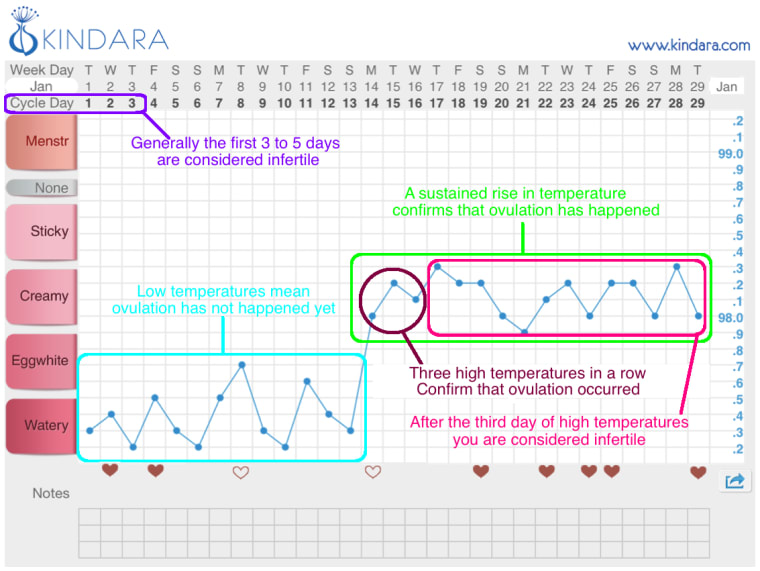
The symptothermal method combines two primary fertility signs — basal body temperature (BBT) and cervical mucus observation — and optionally adds cervical position as a third confirming sign. Because it uses two independent data streams to confirm ovulation, it achieves the highest efficacy of any fertility awareness method. The double-check rule (thermal shift confirmed + mucus drying up) is what makes this method so reliable. This is the method this article focuses on, and it is what I recommend to anyone serious about using FAM as contraception.
2. Cervical Mucus Method (Billings Method)
The Billings method tracks cervical mucus only, without basal temperature. It can be effective but requires a very high level of training and consistency because there is no thermal confirmation of ovulation. It is better suited to women who absolutely cannot take a daily temperature (shift workers, frequent international travel) and who are working directly with a certified Billings educator.
3. Temperature-Only Method
Temperature-only methods use BBT to identify the post-ovulatory infertile phase. Because temperature only rises after ovulation has occurred, this method tells you when the fertile window is closed but gives you no advance warning that it is opening. This limits its utility as a contraceptive tool for the pre-ovulatory phase and makes it most useful for women who are trying to conceive and want to confirm ovulation, or who use it alongside hormonal testing.
How to Get Started: Step by Step
The symptothermal method is a daily practice. It does require consistency, but once the habits are in place most women find it takes less than five minutes a day. Here is how to begin.
Step 1: Choose How You Will Chart
You need a way to record both your BBT readings and your cervical mucus observations each day. Options include a paper chart (downloaded free from various FAM educator sites), a spreadsheet, or an app. If using an app, choose one that lets you plot your actual temperatures on a graph and record your own mucus observations — not one that makes predictions based solely on previous cycle lengths. The Read Your Body app is specifically designed for fertility awareness and supports multiple charting methods. The Fix Your Period App also includes a cycle tracker where you can log your daily temperature, symptoms, and observations alongside your personalized hormonal health protocol.
Step 2: Take Your Basal Body Temperature Each Morning
Basal body temperature is your resting temperature after at least three to five consecutive hours of sleep, taken before you get up, eat, drink, or do anything else. You need a basal body thermometer — these measure to the hundredth of a degree (e.g., 97.55°F rather than 97.5°F) and are far more sensitive than standard fever thermometers. Most cost between $10–$20.
Take your temperature at roughly the same time each morning. Aim to stay within a one-hour window of your usual wake time for the most consistent data. Record the reading immediately. Mark any reading as "disturbed" if you had poor sleep, alcohol the night before, illness, or significant travel — these readings are still useful context but should not be used to confirm ovulation.
After ovulation, progesterone raises your metabolic rate slightly, producing a sustained temperature rise of at least 0.2°C (0.36°F) above your previous six readings. To confirm ovulation with temperature, you need three consecutive elevated readings that are each higher than the previous six. Your temperature then stays elevated for the rest of your luteal phase (typically 10–16 days) and drops just before your period — or stays elevated as an early sign of pregnancy.
Step 3: Observe Cervical Mucus Throughout the Day
Cervical mucus is your primary fertility sign. As estrogen rises in the approach to ovulation, the cervix produces mucus whose job is to keep sperm alive and help it travel. Without it, sperm die within hours in the acidic vaginal environment. With fertile-quality mucus, sperm can survive three to five days.
Check each time you use the bathroom by wiping front to back with flat toilet paper across the vulva and vaginal opening before and after going. Notice two things: how it feels as you wipe (dry, smooth, or lubricative/slippery) and what you can see on the toilet paper.
Mucus progresses through a recognizable pattern across the cycle:
- Dry / nothing: early post-period days; low fertility
- Sticky or pasty (non-peak): white or yellowish; does not stretch more than an inch; early fertile phase
- Creamy (non-peak): lotion-like; indicates rising estrogen; fertile
- Egg-white (peak): clear, stretchy, lubricative — like raw egg whites. This is peak-quality mucus and signals you are very close to ovulation. Any day with this quality is treated as highly fertile.
- Dry again: progesterone takes over after ovulation and dries up mucus quickly
Record the most fertile observation of the day, not the most frequent one. If you see egg-white mucus once and creamy mucus four times, you record egg-white.
Step 4: Identify and Confirm the Fertile Window
The fertile window in a textbook 28-day cycle falls roughly between days 8 and 19, but this varies considerably from person to person and cycle to cycle. Do not rely on the calendar. Use your mucus observations to identify when the fertile window is opening (any mucus = potentially fertile) and your thermal shift plus mucus drying to confirm it has closed.
The double-check rule: you can consider yourself safely past the fertile window once you have three consecutive elevated temperatures (each higher than the previous six) and cervical mucus has returned to dry for at least three days. At the fourth elevated temperature with dry mucus, the post-ovulatory infertile phase is confirmed for that cycle.
Step 5 (Optional): Check Cervical Position
The cervix changes position and texture throughout the cycle in response to estrogen. During the infertile phase it sits lower, feels firm (like the tip of your nose), and the os feels closed. During the fertile window it moves higher, softens (like your lips), and the os feels slightly open. Checking cervical position takes practice — it may take two to three cycles before the changes feel clear — but it adds a useful third sign for confirming what your temperature and mucus are already telling you.
Step 6: Work with a Qualified Educator
I want to be direct about this: the difference in effectiveness between FAM done with proper education and FAM done from reading one article online is real. If you intend to use this as your primary contraceptive method, please work with a certified fertility awareness educator — ideally through several cycles, not just one. The Association of Fertility Awareness Professionals maintains a directory at fertilityawarenessprofessionals.org. Working with an educator is especially important if you are coming off hormonal birth control, postpartum or breastfeeding, or have irregular cycles.
Want to understand your full hormone picture?
Before switching to FAM, it helps to know where your hormones actually stand. Take the free Hormone Health Assessment — a 30-question quiz about your cycle, symptoms, and health history — and get a personalized action plan.
Take the Free Assessment →Modern Tools That Support FAM (2024–2025)
The femtech space has matured considerably. There are now several well-validated tools that make FAM more accessible, more accurate, and easier to sustain. Here is a current overview — for deeper comparisons, see my fertility tracking devices guide and cycle tracking apps guide.
Tempdrop
A wearable BBT sensor worn on the upper arm overnight. It captures thousands of temperature data points across your sleep and delivers a single reliable reading in the morning — eliminating the need to wake at the same time every day. Ideal for shift workers, light sleepers, new mothers, and anyone who struggles with consistent morning temping. Integrates directly with Read Your Body.
Natural Cycles
The first and only FDA-cleared birth control app (cleared 2018). Uses BBT — taken with a standard thermometer or synced from an Oura Ring — alongside an algorithm to assign green (not fertile) or red (fertile) days. Clinical trial data: 93% typical use, 98% perfect use. Best used alongside your own mucus tracking for highest confidence.
Mira Hormone Monitor
An at-home lab-grade device that quantifies LH, estrogen (E3G), progesterone metabolite (PdG), and FSH from urine. Mira provides numerical hormone values rather than simple positive/negative results, giving you detailed insight into your fertile window and confirming ovulation with progesterone data. Particularly useful for women with irregular cycles or PCOS.
Read Your Body App
A privacy-first, woman-owned app designed specifically for fertility awareness charting. Supports multiple FAM methods, lets you plot your own BBT data on a graph, record cervical mucus and position, and does not make automated fertility predictions unless you want them. The top recommendation from most certified FAM educators for app-based charting.
Oura Ring (with Natural Cycles)
The Oura Ring 4 measures skin temperature continuously overnight and syncs directly with Natural Cycles, removing the need for a separate thermometer. It also provides sleep, heart rate variability, and recovery data. A strong option for women who want fertility tracking embedded in a broader health wearable.
OPK Strips (Supplemental)
Over-the-counter ovulation predictor kits detect the LH surge that precedes ovulation by roughly 24–36 hours. They are not a FAM method on their own — a positive OPK tells you ovulation is likely approaching, not that it has occurred — but used alongside BBT and mucus tracking they add a useful cross-check during the pre-ovulatory phase, especially when you are new to FAM and still learning to read your mucus pattern.
Who FAM Works Well For
- Women who are highly motivated and willing to track daily — every day, including weekends and holidays
- Women with a supportive partner who is willing to adjust sexual behavior based on cycle phase
- Women who want a hormone-free contraceptive option for medical or personal reasons
- Women who are also interested in cycle awareness and reproductive health beyond just contraception
- Women who are trying to conceive and want to pinpoint their fertile window
- Women with irregular cycles who want to understand when and whether they are ovulating (FAM is actually especially informative for irregular cycles — it is the rhythm method that struggles here, not FAM)
Who Should Use Caution (or Choose a Different Method)
- Women who cannot commit to daily tracking. FAM only works when the signs are observed and recorded consistently. Skipping days during the fertile window undermines the method.
- Women in the transition off hormonal birth control. Your cycles may be irregular and your mucus patterns atypical for several months. Use a barrier method as backup during this period while you learn your pattern.
- Women who are postpartum or breastfeeding. Ovulation is suppressed and then returns unpredictably. Specialized postpartum FAM guidance applies — work with an educator.
- Women for whom pregnancy would be medically dangerous or otherwise very high-stakes. In these situations, the typical-use failure rate (up to 24 unintended pregnancies per 100 women per year) warrants serious consideration. Pairing FAM with consistent barrier method use on fertile days and working with an educator narrows this gap significantly.
- Women with partners who are not fully supportive. FAM requires partner participation and communication. If you cannot trust your partner to respect your fertile days, this method is not the right fit.
For more on how hormonal birth control affects your body and what to expect when you stop, see my article on coming off the pill the right way.