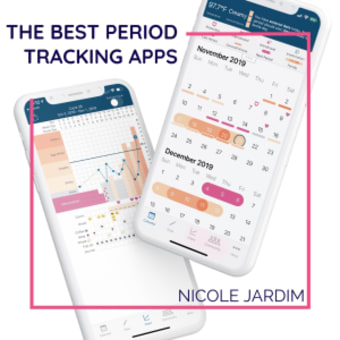
The "femtech" space has exploded in the last decade, and the options for tracking your menstrual cycle have never been more varied — or more confusing. You can download a free app, buy a $30 BBT thermometer, invest in a wearable arm sensor that tracks your temperature overnight, or test your actual hormone levels from home with lab-grade accuracy. And buried somewhere in all that innovation is a lot of outdated information, a few discontinued products, and the occasional tool that turned out to be more hype than substance.
This guide consolidates everything I've learned about cycle tracking technology — including the devices I used to recommend that no longer exist, the ones that have genuinely changed how people understand their cycles, and how to match the right tool to your actual goal. If you've ever searched "period tracking app" or "fertility tracking device" and come away more confused than when you started, this is the resource I wish had existed sooner.
Section 1: Why Track Your Cycle at All?
Before we get into the tools, let's talk about why this matters. Your menstrual cycle is what I — along with many practitioners — call your fifth vital sign, right alongside heart rate, blood pressure, respiratory rate, and temperature. It is a direct, monthly readout of your hormonal and overall health.
Most people grow up thinking about their period as something that happens to them once a month — something to manage, sometimes dread, and otherwise ignore. Cycle tracking flips that entirely. When you understand what your cycle data is telling you, you gain:
- Body literacy — knowing where you are in your cycle and how it affects your energy, mood, libido, appetite, and cognitive performance
- Early warning signals — recognizing when something is off (a longer or shorter cycle, missing ovulation, luteal phase changes) before it becomes a bigger health issue
- Fertility awareness — understanding your actual fertile window, whether you're trying to conceive or trying to avoid pregnancy naturally
- Personalized health data — bringing real numbers and patterns to appointments with your healthcare provider instead of trying to remember what happened four months ago
The goal isn't to outsource your body knowledge to an app. It's the opposite: to build a direct, informed relationship with your own cycle so that no algorithm can replace what you know about yourself. The best tracking tools support that goal — they don't substitute for it.
Section 2: The Five Categories of Cycle Tracking Tools
Cycle tracking technology falls into five distinct categories, each with a different mechanism, level of precision, and appropriate use case. Here is a clear breakdown of each.
1. Period and Symptom Tracking Apps (Logging Only)
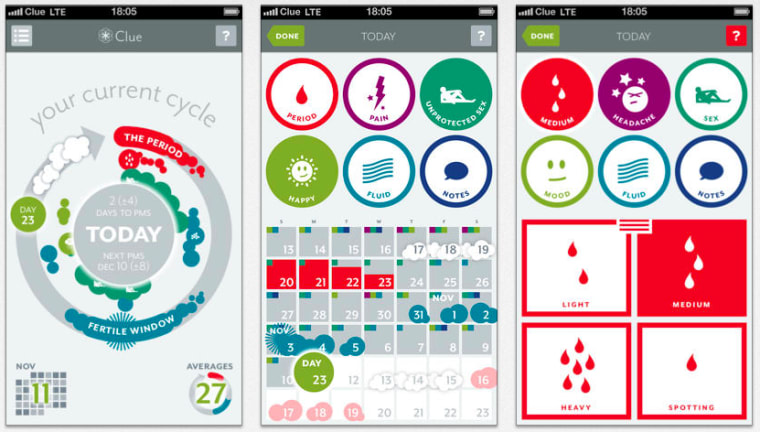
These apps let you record the start and end of your period, log symptoms, note mood changes, track cervical mucus, and log sexual activity. They use your cycle history to predict when your next period will arrive and estimate a fertile window — but that estimate is based on your past cycles, not on any real-time biological data from the current cycle.
Think of this category the way a good FAM educator once put it to me: these apps are like a broken clock — right twice a day, but you'll never be anywhere on time. Ovulation doesn't always happen on the same day each cycle. Your app has no way to know if you ovulated earlier or later this month because of stress, illness, travel, or any other factor. For general period tracking and symptom logging, these apps are useful. For reliable fertility timing, they are not enough on their own.
Current options worth knowing:
- Clue — one of the most scientifically grounded free apps; clean interface, good symptom tracking, no paywall for core features
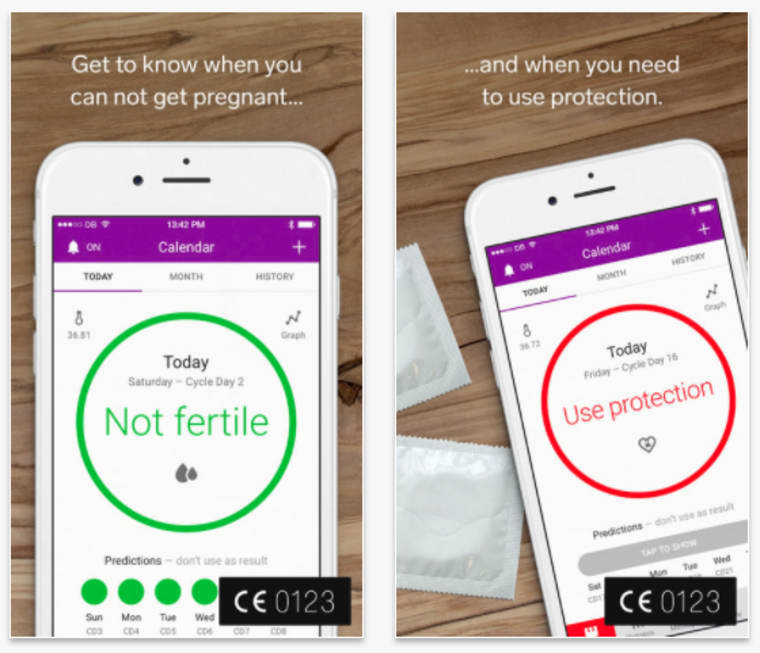
- Natural Cycles (app only) — FDA-cleared as a birth control app when used with temperature data; the app itself without a thermometer input is not the same as the certified method
- Flo — widely used but carries significant privacy concerns; investigations found that Flo shared sensitive health data with Facebook and other third-party advertisers. I do not recommend Flo for anyone who takes their data privacy seriously, which should be everyone tracking reproductive health information.
- Read Your Body — my top recommendation for anyone practicing the symptothermal method of FAM; built specifically for fertility awareness users, supports both cervical mucus charting and BBT graphing, and is owned by a woman-led company that prioritizes data privacy
2. Basal Body Temperature (BBT) Thermometers — The Traditional Method
Basal body temperature is your temperature at complete rest, measured first thing in the morning before you get out of bed or do anything else. It is one of the two primary fertility signs in the symptothermal method of FAM — and it is a powerful one, because after ovulation occurs, progesterone causes a sustained rise in your BBT of at least 0.2°C (0.36°F) that persists through the rest of your luteal phase.
This post-ovulatory temperature shift confirms that ovulation has happened. When you see three consecutive temperatures higher than the previous six (all undisturbed), you have confirmed ovulation — and the fertile window for that cycle has closed. BBT alone cannot predict ovulation in advance; it confirms it retrospectively. That is why it is always used alongside cervical mucus observation in a complete symptothermal practice.
How traditional BBT thermometers work: You take your temperature orally (or vaginally) each morning after at least three to five hours of consecutive sleep, at roughly the same time daily, and manually enter the reading into your charting app. A BBT thermometer measures to the hundredths of a degree (97.55°F vs. 97.5°F on a standard fever thermometer), which is necessary to detect the subtle shifts related to ovulation.
Limitations: Your BBT is highly sensitive to disruption — poor sleep, alcohol the night before, illness, sleeping in, or traveling across time zones can all produce artificially elevated or suppressed readings that make your chart harder to interpret. This is where wearable BBT sensors (covered next) offer a meaningful advantage.
Standard BBT thermometers run $10–$20 and are widely available. They are the right starting point for anyone new to FAM and on a budget.
3. Smart BBT Wearables: Tempdrop, Natural Cycles Thermometer, Daysy
Smart BBT devices address the core limitation of traditional thermometers — the requirement to wake at a consistent time and take your temperature before any movement or activity. For shift workers, new parents, people with irregular sleep, and anyone whose schedule doesn't cooperate, traditional BBT tracking can be genuinely difficult.
Tempdrop is the wearable I recommend most consistently. It is a small sensor worn in a soft band around your upper arm while you sleep. Throughout the night, it captures thousands of temperature data points and uses a proprietary algorithm to derive a single accurate BBT reading — filtering out sleep disturbances in the process. You sync it to the Tempdrop app (or directly to Read Your Body, which has a Tempdrop integration) in the morning, whenever is convenient. Tempdrop is excellent for shift workers, postpartum and breastfeeding people, those with PCOS or irregular cycles, and anyone who consistently struggles with traditional BBT timing. It is compatible with the full symptothermal method — you still track cervical mucus alongside it.
Daysy is a standalone fertility monitor — you take your temperature with the Daysy device each morning, and it displays your fertility status directly: red (fertile), green (not fertile), or yellow (learning your cycle). It draws on a large dataset of cycles and its own algorithm to calculate fertility status from your BBT and period data alone. It does not require you to learn to interpret your own chart, which some people find appealing and others find limiting. I think Daysy is a solid option for beginners, but I always recommend also tracking cervical mucus to ensure you have the fullest picture, rather than relying on the device's green/red output exclusively.
Natural Cycles paired with the Oura Ring offers a similar experience to Daysy but delivered through a ring you wear overnight. The Oura Ring measures skin temperature continuously while you sleep; that data flows into the Natural Cycles app, which provides a daily fertility status. Natural Cycles is the first FDA-cleared birth control app, and the Oura partnership makes the temperature-gathering passive. Note that both the Natural Cycles subscription and an Oura membership are required for this pairing, so the cost is meaningful. On its own, the Oura Ring also provides deep sleep, HRV, and readiness data that many people find valuable for overall health optimization beyond cycle tracking.
Note on discontinued devices: If you have come across references to the Ava bracelet or the Kindara/Wink thermometer in older articles — including possibly older versions of this one — both products are no longer available. Ava shut down in 2023. Kindara discontinued its Wink thermometer, and the app itself has had significant issues. I am noting this explicitly because there is still a lot of outdated content circulating that recommends these products. Do not purchase them.
4. Ovulation Predictor Kits (OPKs) and At-Home Hormone Tests
Ovulation predictor kits detect the LH surge — the hormonal spike that occurs 24–36 hours before ovulation — in your urine. Standard OPK strips give you a positive or negative result. They are useful for identifying when ovulation is approaching, particularly for people trying to conceive who want to time intercourse or insemination, and they can be a helpful complement to BBT and cervical mucus data.
The more advanced options in this category go significantly further:
Inito is an at-home fertility monitor that attaches to your iPhone and reads a test strip you dip in urine. It measures four hormones: estrogen (E3G), LH, FSH, and the progesterone metabolite PdG — giving you numerical values rather than a positive/negative result. The inclusion of PdG is particularly important: most OPKs only tell you that ovulation is approaching; Inito can also confirm that ovulation actually occurred and that progesterone rose appropriately afterward, which is critical information for anyone with suspected luteal phase defects or progesterone insufficiency. Inito currently supports iPhone only.
Easy@Home strips with the Premom app offer a more affordable entry point for LH testing with digital tracking. The strips are inexpensive, and the Premom app uses your phone's camera to read the strips and track your LH curve over time — showing you whether your surge was typical or unusual, rather than just a single-day positive.
5. Continuous Hormone Monitors: Mira
Mira is in a category of its own. It is the most comprehensive at-home hormonal monitoring system currently available. Rather than detecting the presence or absence of LH, Mira measures the actual concentration of four key fertility hormones in your urine: LH (luteinizing hormone), E3G (estradiol metabolite), PdG (progesterone metabolite), and FSH (follicle stimulating hormone). You use the Mira Analyzer device — which uses immunofluorescent technology, the same approach as fertility labs — to read Mira wands dipped in urine.
This is genuinely different from everything else in this guide. Knowing your actual hormone levels over the course of your cycle, not just whether a surge happened, gives you a level of insight that previously required lab testing. For someone with PCOS, premature ovarian insufficiency, unexplained infertility, or any situation where hormonal patterns matter clinically, Mira provides data that is both actionable and meaningful. The tradeoff is cost — the analyzer plus wands represent a significant investment — and the fact that you can expect to test 10–20 times per cycle.
Standard BBT Thermometer
$10–$20. The foundation of FAM. Requires consistent wake time but teaches you to read your own chart data.
Tempdrop
Arm-worn sensor. Ideal for shift workers, new parents, irregular sleepers, and anyone with PCOS.
Daysy
Simple red/green fertility display. Good for those who want guidance without interpreting their own chart.
Natural Cycles + Oura
Passive overnight temperature collection via ring, daily fertility status in app. Requires dual subscription.
Mira
Lab-grade at-home hormone testing. Measures LH, E3G, FSH, PdG levels — not just presence/absence.
Inito
iPhone-based. Tracks E3G, LH, FSH, and PdG — including post-ovulatory progesterone confirmation.
Oura Ring
HRV, sleep, temperature, and cycle prediction from biometrics. Pairs with Natural Cycles for fertility tracking.
Clue
Clean, science-forward symptom and period tracker. Good for general logging; not a fertility method on its own.
Ava Bracelet
Ava shut down in 2023. Do not purchase. No replacement devices or app support available.
Kindara / Wink
Wink thermometer discontinued; Kindara app no longer supported. If you used these, transition to Tempdrop + Read Your Body.
Section 3: How to Choose the Right Tool for Your Goal
The single most important question to answer before spending any money on tracking technology is: what am I actually trying to do? The answer changes everything about which tool is right for you.
| Your Goal | Recommended Approach |
|---|---|
| Log my period and basic symptoms | Clue (free) or Read Your Body app |
| Learn fertility awareness / symptothermal method | BBT thermometer or Tempdrop + Read Your Body app + FAM educator |
| Natural birth control without interpreting my own chart | Daysy or Natural Cycles (with thermometer or Oura Ring) — with FAM educator |
| Trying to conceive — identify fertile window | Tempdrop or Daysy + Inito or Easy@Home OPKs with Premom |
| Understand my hormonal patterns in depth | Mira (most comprehensive) or Inito |
| PCOS, irregular cycles, or fertility challenges | Mira or Inito + Tempdrop; consult a specialist alongside |
| General health optimization and cycle awareness | Oura Ring (with cycle tracking feature), potentially paired with Natural Cycles |
| Postpartum / irregular sleep / shift work | Tempdrop (designed specifically for this) + Read Your Body |
A few additional considerations worth factoring in:
- Budget: A standard BBT thermometer and a free app will get you remarkably far. The wearables and hormone monitors add precision but also cost — some require ongoing consumables (wands, test strips) that add up over time.
- Lifestyle: If you cannot reliably take your temperature at the same time every morning, a wearable like Tempdrop removes that variable entirely.
- What you're recently coming off: If you've just stopped hormonal birth control, your cycles may be irregular for several months. This is one of the situations where working with a trained FAM educator is especially valuable, as your chart patterns will look different initially.
- Data privacy: For anyone logging sensitive reproductive health information, read the privacy policy before downloading an app. Some platforms (Flo being the most documented case) have a history of sharing user data with advertisers. Read Your Body and the Tempdrop app have stronger privacy track records.
For a deeper look at wearable fertility trackers including more detail on how Tempdrop, Daysy, and the Oura Ring compare in real-world use, I've written a companion guide to this one. And if you're specifically interested in using FAM for contraception, the natural birth control guide covers the method framework, efficacy data, and what the research actually says.
Not sure where your hormones stand?
Before investing in tracking technology, it helps to know what symptoms you're working with. The free Hormone Health Assessment asks 30 questions about your cycle and returns a personalized protocol built around your specific picture.
Take the Free Assessment →Section 4: The FAM Foundation — Why No App Replaces Understanding the Method
I want to spend some time here because this is the part that most tracking guides skip entirely — and it's arguably the most important section.
The Fertility Awareness Method (FAM) is not a technology. It is a framework for observing and interpreting the biological signs your body produces throughout your menstrual cycle — primarily cervical mucus and basal body temperature, and optionally cervical position. Technology can support and enhance that framework, but it cannot replace the foundational knowledge of how to read your own signs.
Here is why this matters practically: cervical mucus is your primary fertility sign. As estrogen rises approaching ovulation, your cervix produces mucus that progressively changes from dry or tacky to wet, clear, and stretchy — what FAM educators call Peak Type mucus, because it looks and feels like raw egg whites and signals that you are at or very near ovulation. After ovulation, progesterone dries up cervical mucus and causes the sustained BBT rise we discussed earlier. Together, these two signs allow you to identify your fertile window in real time — not based on predictions from past cycles, but from what your body is doing right now in this cycle.
No period tracking app that only takes your cycle start date can do this. When an app tells you "you're fertile days 10–15," it is making a statistical guess based on your history. That guess can be wrong by days — and those days matter significantly for both pregnancy prevention and conception.
The symptothermal method in practice involves three steps:
- Check cervical mucus throughout the day — fold your toilet paper flat, wipe front to back across the vulva and vaginal opening, and notice both how it feels (dry, smooth, or lubricative) and what you see (nothing, white/cloudy, or clear and stretchy). Your most fertile observation of the day is what you record — one instance of peak mucus counts as a peak day, even if the rest of the day was dry.
- Take your BBT each morning — upon waking, before getting up, at roughly the same time each day. Record it in your chart. A sustained rise of at least 0.2°C above the previous six temperatures across three consecutive readings confirms that ovulation has occurred.
- Confirm ovulation and identify the fertile window — ovulation is confirmed when both cervical mucus has dried up completely and three elevated temperatures have been recorded. At four elevated temperatures, you can generally consider yourself out of the fertile window for that cycle.
The Justisse Method, the Billings Ovulation Method, the Creighton Model, and the symptothermal method as taught by educators associated with the Association of Fertility Awareness Professionals all operate on these same core biological principles, with variations in charting conventions and rules. What they share is a commitment to teaching you to read your body directly — not to outsource that reading to an algorithm.
This is especially important if you're using FAM to avoid pregnancy. The highest efficacy rates — which rival hormonal methods in perfect-use studies — are consistently achieved by people who have received quality education from a trained educator, not just downloaded an app. I strongly recommend consulting the Association of Fertility Awareness Professionals to find an educator, or picking up Taking Charge of Your Fertility (Toni Weschler) and The 5th Vital Sign (Lisa Hendrickson-Jack) as foundational reading.
Section 5: Nicole's Approach — Body Literacy Over Tech Dependence
I have tried almost every device I've described in this guide. My personal practice has included a simple BBT thermometer for years, and I've tested Tempdrop, Daysy, Mira, and Inito at various points. Here is what I've learned: the technology that has served me best is the technology that has made me a more informed reader of my own cycle — not the technology that has made cycle tracking easier to ignore.
There is a real risk with the more automated tools — particularly the ones that give you only a green or red light, or a "fertile / not fertile" notification — that you stop learning what your actual signs are doing. You become dependent on the algorithm rather than building competence with your own data. For someone with a regular, easy-to-read cycle and no fertility goals beyond general awareness, this may be acceptable. For someone navigating infertility, irregular cycles, coming off hormonal birth control, postpartum recovery, or using FAM as their primary contraception, this passivity can be a real problem.
My recommendation is always to start with the method — understand what your cervical mucus and BBT are doing — and then add technology in service of that understanding. Use Tempdrop because it helps you get consistent data despite an irregular schedule, not because it lets you skip charting. Use Mira because it gives you hormonal context for what you're observing in your mucus and temperature, not as a replacement for observing at all. The goal is to know your body well enough that no device failure, discontinued app, or company shutdown leaves you without the information you need. The Ava bracelet shutting down in 2023 stranded a lot of users who had relied entirely on the device and never learned their underlying fertility signs. That is the version of this I most want to help you avoid.
Tracking your cycle is one of the most powerful things you can do for your long-term reproductive and overall health. The femtech tools available today are genuinely exciting — and they work best when they are layered onto body literacy, not used to replace it.