When I ask women what they know about cortisol, most of them say some version of the same thing: "It's the stress hormone. It goes up when I'm stressed and that's bad for my hormones." That framing is accurate as far as it goes — but it leaves out most of the story, and most of the story is what actually matters for your health.
Cortisol is not a villain. It is a master regulator that your body cannot function without. The problem is not cortisol itself — it is what happens when the system that produces and controls cortisol gets stuck. Too much, too little, or a flattened daily rhythm all create their own distinct patterns of hormonal chaos. And because cortisol has direct biological conversations with your progesterone, your thyroid, your insulin, and your sleep hormones, the downstream effects are far-reaching.
This article gives you the complete picture: what cortisol actually is, what a healthy versus dysregulated cortisol pattern looks like, exactly how it disrupts your female hormones, the signs your cortisol is off, how to test it properly, and the full restoration protocol I use with my clients.
What Cortisol Is — and Why It Matters
Cortisol is a glucocorticoid hormone produced in the zona fasciculata — the middle layer of your adrenal cortex, the outer part of the adrenal glands that sit just above your kidneys. It is the most potent and abundant glucocorticoid in the human body, and it is released in response to signals from the brain through the HPA axis — the hypothalamic-pituitary-adrenal axis.
Here is how that cascade works: when your brain perceives a stressor — physical or psychological, real or imagined — the hypothalamus releases corticotropin-releasing hormone (CRH). CRH signals the pituitary gland to release adrenocorticotropic hormone (ACTH). ACTH travels in the bloodstream to the adrenal glands and tells them to produce and release cortisol. The whole sequence happens within seconds.
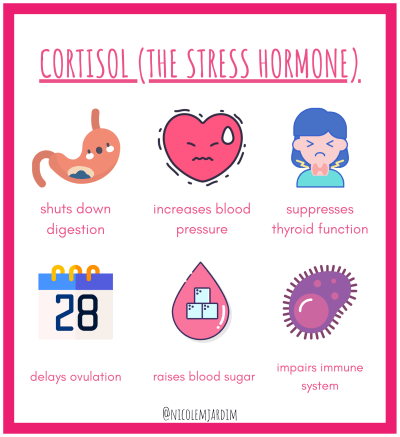
Once cortisol is in the bloodstream, it does an extraordinary number of things. It raises blood sugar by prompting the liver to release glucose. It temporarily suppresses the immune system, the digestive system, and the reproductive system — all functions that are considered nonessential in a genuine emergency. It sharpens mental focus and increases alertness. It is, in this context, an act of brilliant biological engineering: everything you need to survive a threat, instantly mobilized.
Think of cortisol as the tow truck and cleanup crew of your stress response. While adrenaline and norepinephrine are the first responders — the turbo-boost chemicals that make you capable of extraordinary physical action in the first seconds of a threat — cortisol is the hormone that sustains and extends the stress response, keeping you powered through demanding situations over hours rather than seconds.
When the threat resolves, cortisol is supposed to come back down. In a healthy system, it does. In our modern world, for many women, it never fully does — and that is where the damage begins.
The Normal Cortisol Rhythm: Why Pattern Matters More Than Level
One of the most important and most misunderstood things about cortisol is that it is not meant to be flat. Healthy cortisol has a specific daily rhythm, and disruption of that rhythm is often as damaging as absolute levels that are too high or too low.
A healthy cortisol pattern looks like this:
- Sharp rise in the first 30–45 minutes after waking — this is the cortisol awakening response (CAR), a surge driven by the brain's recognition that light has arrived. It is your body's way of mobilizing energy for the day ahead. Natural morning light exposure is one of the key signals that produces a robust CAR.
- Gradual decline through the morning and afternoon — cortisol remains relatively elevated through the morning, supporting focus, energy, and blood sugar regulation, then begins to taper after noon.
- Continued tapering into the evening — as daylight fades, cortisol continues to drop. This falling cortisol level is part of the signal that allows melatonin to rise and prepare the body for sleep.
- Lowest point around midnight — cortisol reaches its nadir in the deep sleep hours, allowing tissue repair, immune restoration, and the hormonal processes that require a low-cortisol environment.
This rhythm is not a luxury feature. It is fundamental architecture. The rising morning cortisol sets the tone for your energy, focus, and metabolic function all day. The falling evening cortisol is what makes sleep — and all of its hormonal benefits — possible. When this rhythm is intact, your hormonal system has the predictable, cyclical environment it needs to do its job. When the rhythm breaks down, everything downstream is affected.
What Happens When Cortisol Goes Wrong
Cortisol dysregulation does not present as a single pattern. There are three distinct phases of cortisol dysfunction, and each creates a different set of symptoms.
High Cortisol: The Chronic Stress Phase
When the HPA axis is chronically activated — which is the case for most women under sustained psychological, physical, or lifestyle stress — cortisol is elevated too much of the time. This is the pattern most people associate with "too much stress," and for good reason. The effects of chronically elevated cortisol include:
- Visceral weight gain, particularly around the abdomen — cortisol promotes fat storage in visceral tissue and drives insulin resistance
- Blood sugar dysregulation — cortisol signals the liver to release glucose, which spikes blood sugar even without eating
- Poor sleep and early morning waking — elevated evening cortisol directly competes with melatonin and disrupts sleep architecture
- Anxiety, irritability, and a low stress threshold — the nervous system stays wound up even when the external stressor has resolved
- Immune suppression — chronic high cortisol is anti-inflammatory in the short term, but over time it impairs immune surveillance and leaves the body vulnerable
- Estrogen dominance — cortisol disrupts the balance between estrogen and progesterone by suppressing progesterone production
- Thyroid disruption — cortisol impairs the conversion of thyroid hormone from its inactive form (T4) to its active form (T3)
- Low progesterone — through multiple mechanisms covered below
Low Cortisol: The Burnout Phase
After a prolonged period of high cortisol, the HPA axis can shift into a state of hypoactivation — sometimes loosely called "adrenal fatigue," more accurately termed HPA axis burnout. The adrenal glands have not actually stopped working, but the signaling system governing them has become blunted. Symptoms of chronically low cortisol include:
- Profound, unrelenting fatigue that sleep does not fix
- Low blood pressure and dizziness when standing
- Intense salt cravings — aldosterone production, which regulates sodium and potassium balance, is also impaired
- Inability to handle stress — even minor stressors feel overwhelming because the buffering system has been depleted
- Low immunity — frequent illness, slow recovery, reactivation of latent viruses
- Low mood and depression — cortisol supports dopamine and serotonin signaling; insufficient cortisol undermines mood regulation
Flat Cortisol Rhythm: The Most Common Chronic Pattern
The pattern I see most often in women who have been under chronic stress for months or years is neither simply high nor simply low — it is a loss of the normal daily rhythm. Cortisol is blunted in the morning (no robust awakening response, making getting up feel genuinely impossible) and elevated or erratic at night (making sleep onset difficult and causing middle-of-the-night waking). This is sometimes called a flat cortisol curve.
The flat pattern is often more disruptive to long-term health than either of the other two, precisely because it affects everything that depends on the cortisol rhythm as a timing signal: sleep quality, energy across the day, blood sugar regulation, hormonal cycling, immune function, and mood stability. You may not test "high" or "low" — which is why this pattern is often missed by conventional testing that only measures a single morning cortisol level.
Cortisol's Direct Effects on Female Hormones
This is the piece that most hormonal health conversations skip entirely, and it is the most important part for understanding why so many women with stress issues also have period problems, fertility challenges, and thyroid dysfunction. Cortisol does not just affect your wellbeing in a general sense — it has specific, biochemical conversations with every major female hormone.
Pregnenolone Steal: Your Body Robs Your Sex Hormones to Make Cortisol
All of your steroid hormones — cortisol, progesterone, estrogen, testosterone, and DHEA — are manufactured from the same starting material. Cholesterol is first converted into pregnenolone, often called the "mother hormone" because every steroid hormone in the body can be made from it.
From pregnenolone, two main branches diverge: the pathway toward DHEA and the sex hormones (progesterone, estrogen, testosterone), and the pathway toward cortisol. In a body under chronic stress, the demand for cortisol production is enormous and relentless. Your body's response is to direct more and more pregnenolone toward the cortisol pathway — leaving progressively less raw material available for sex hormone synthesis.
Think of pregnenolone as a shared budget. When your stress system makes cortisol production the emergency priority, it effectively defunds the sex hormone department. Progesterone, estrogen, and testosterone all suffer as a result — not because anything is wrong with your ovaries, but because the raw material was redirected upstream.
This is why women under sustained high stress commonly develop low progesterone, estrogen imbalance, reduced libido, and even DHEA deficiency. And it is why the downstream effects compound over time: as DHEA drops with chronic stress, the body loses one of its key buffers against cortisol's catabolic effects on tissues and organs.
Cortisol Blocks Progesterone Receptors
Even when some progesterone is produced, high cortisol can render it functionally useless. Cortisol and progesterone share structurally similar receptors — which means cortisol can occupy progesterone receptors throughout the body, blocking progesterone from binding and exerting its effects. This is called competitive receptor inhibition.
The result is what functions like a progesterone deficiency, even if blood levels of progesterone test within a normal range. You may experience breast tenderness, pre-period spotting, luteal phase mood instability, anxiety, disrupted sleep in the second half of your cycle, and acne — all classic low progesterone symptoms — while your lab values tell a different story. Because progesterone converts in the brain to the calming neurosteroid allopregnanolone, which enhances GABA (the brain's primary inhibitory neurotransmitter), this receptor blockade also worsens PMS and PMDD symptoms significantly.
Cortisol, Insulin Resistance, and Androgen Excess
Chronically elevated cortisol drives insulin resistance. This is not a coincidence — it is the mechanism. Cortisol signals the liver to release glucose and reduces insulin sensitivity in peripheral tissues, because in a genuine emergency, you want blood sugar available to your muscles and brain immediately. When this happens repeatedly over months and years, the tissues that should respond to insulin stop doing so reliably.
Insulin resistance, in turn, drives androgen excess. High insulin stimulates the ovaries to produce more testosterone and androstenedione, and simultaneously suppresses sex hormone binding globulin (SHBG) — the protein that keeps androgens bound and inactive in the bloodstream. Less SHBG means more free testosterone circulating. The result is the androgen-excess profile associated with blood sugar dysregulation and PCOS: acne, hair thinning on the scalp, facial hair growth, and irregular or absent ovulation. Many women with PCOS have cortisol dysregulation at the root of their androgen excess, particularly those whose DHEA-S is also elevated — a pattern sometimes called adrenal PCOS.
Cortisol Suppresses Thyroid Function
High cortisol directly impairs thyroid hormone conversion. The active thyroid hormone your cells need is T3 — but most of what the thyroid gland produces is T4, an inactive precursor that must be converted to T3 primarily in the liver and gut. Under chronic stress, elevated cortisol shifts this conversion pathway: instead of producing T3, the body preferentially produces reverse T3 (rT3), an inactive mirror-image molecule that blocks T3 receptors without activating them.
The result is a functional thyroid insufficiency even when TSH and T4 levels look normal — a pattern that explains why so many stressed women experience the classic hypothyroid symptom cluster (fatigue, hair loss, cold hands and feet, slow digestion, weight gain, brain fog) while being told their thyroid tests are fine. Cortisol also suppresses TSH production directly, reducing the signal to the thyroid to produce hormones in the first place.
Cortisol Disrupts Sleep — Which Creates a Hormonal Cascade
Cortisol and melatonin operate in direct opposition: when one is high, the other should be low. Elevated evening cortisol — which is the signature of a disrupted cortisol rhythm — prevents melatonin from rising naturally as darkness falls. Poor melatonin impairs sleep quality and duration.
This matters profoundly beyond feeling tired, because sleep is when your body does most of its hormonal repair work. Growth hormone secretion, progesterone synthesis, thyroid hormone conversion, and the downregulation of the HPA axis itself all peak during deep sleep. Disrupted sleep means all of these processes are impaired — which in turn elevates the next day's cortisol load further. This is the hormonal doom loop: cortisol disrupts sleep, impaired sleep elevates cortisol, elevated cortisol further impairs sleep.
Signs Your Cortisol Is Dysregulated
Common Signs of Cortisol Imbalance
- Waking up feeling unrefreshed, needing caffeine to function in the morning
- Energy crashes in the mid-afternoon (between 2 and 4pm)
- Getting a second wind of energy late at night, making sleep difficult
- Waking between 2 and 4am and struggling to fall back asleep
- Anxiety, nervous energy, or a sense of being "wired but tired"
- Belly fat that won't budge despite diet and exercise
- Blood sugar swings — feeling shaky, hangry, or foggy between meals
- Salt cravings, especially in the afternoon
- Intense cravings for sweet or salty foods when stressed
- PMS that worsens during stressful periods
- Irregular or missing periods during high-stress life chapters
- Low progesterone symptoms (spotting before period, breast tenderness, short luteal phase)
- Thyroid symptoms (fatigue, hair loss, cold sensitivity) with "normal" labs
- Recurrent infections, slow wound healing, or reactivation of old illnesses
- Brain fog, difficulty concentrating or making decisions
- Low motivation, emotional flatness, or feeling like everything requires enormous effort
If you recognize multiple items from this list, cortisol dysregulation — and the HPA axis dysfunction driving it — is very likely part of your picture. The important thing to understand is that these are not random symptoms. They are logical downstream effects of a hormonal system under chronic strain. And they can be addressed.
How to Test Cortisol: Getting the Full Picture
Standard cortisol testing — a single morning serum cortisol ordered by a GP — can tell you something, but it misses the most clinically useful information: the rhythm. A single snapshot of morning cortisol cannot tell you whether you have a robust cortisol awakening response, whether your levels decline appropriately through the day, or whether your evening cortisol is elevated. All of those patterns require a different type of testing.
4-Point Salivary Cortisol Test
This is the most practical and clinically informative starting point. Saliva samples are collected at four time points across the day — on waking, around noon, in the late afternoon, and at bedtime — and the result gives you a graph of your cortisol rhythm rather than a single number. You can see immediately whether your morning cortisol response is robust or blunted, whether you have the typical midday and afternoon tapers, and whether your evening cortisol is elevated when it should be falling. This test can be ordered through functional medicine practitioners or directly through testing companies.
DUTCH Test (Dried Urine Test for Comprehensive Hormones)
The DUTCH test adds depth beyond salivary cortisol by measuring cortisol metabolites — the breakdown products of cortisol that accumulate in urine over time. This is important because salivary cortisol measures what is circulating at a moment in time, while cortisol metabolites tell you about total cortisol production over the preceding hours. The DUTCH also measures cortisone (the inactive form cortisol converts to) and can indicate whether your body is appropriately activating and deactivating cortisol. For women with suspected HPA axis dysfunction, the DUTCH is the most comprehensive picture available.
Morning Serum Cortisol
A morning serum cortisol test, drawn between 8 and 9am, is the standard conventional medicine tool and remains useful as a baseline screen. Very low results (below 10 mcg/dL) or very high results may indicate a need for further investigation. However, a single value in the "normal" range does not rule out rhythm disruption, metabolic issues with cortisol activation, or the functional cortisol insufficiency pattern described above.
Get your personalized hormonal health protocol
Take the free Hormone Health Assessment — 30 questions about your cycle, symptoms, and lifestyle — and receive a tailored action plan built for your body.
Take the Free Assessment →The Full HPA Axis Restoration Protocol
Restoring cortisol balance is not a single-intervention fix. Because the HPA axis is a complex feedback system with inputs from diet, sleep, light exposure, stress load, exercise intensity, and nutrient status, the restoration protocol needs to address all of these levers simultaneously. Here is how I approach it.
Blood Sugar Stability: The Non-Negotiable Foundation
Every blood sugar spike and crash sends an emergency signal to the HPA axis and triggers a cortisol release. This means that even a person doing everything else right — sleeping well, meditating, taking adaptogens — can perpetuate cortisol dysregulation simply through erratic eating patterns. Blood sugar stability is the foundation upon which everything else rests.
The key principles:
- Eat within 1–2 hours of waking. Skipping breakfast or drinking only coffee in the morning prolongs the overnight fast and forces the adrenals to produce cortisol to maintain blood glucose. A protein-rich breakfast is one of the most direct interventions for morning cortisol regulation.
- Never eat carbohydrates alone. Every meal and snack should combine protein, fat, fiber, and carbohydrate. This slows glucose absorption and prevents the insulin spike-and-crash cycle that drives cortisol release. A palm-sized portion of protein with abundant vegetables and a small amount of whole grain or starchy vegetable cooked in a quality fat is the ideal structure.
- Space meals 4–6 hours apart once blood sugar is stable. Until then, eating every 2–3 hours may be necessary to prevent hypoglycemic episodes that trigger cortisol.
- For those with low cortisol or low blood pressure, a moderate-fat, moderate-carbohydrate approach is better than strict low-carb. Avoid intermittent fasting until cortisol is restored.
- Avoid snacking within 2 hours of bedtime. Late-night eating disrupts the natural overnight cortisol nadir and undermines sleep quality.
- Stay well hydrated. Dehydration is a physical stressor that activates the HPA axis.
Anti-Inflammatory and Adrenal-Supportive Nutrition
Inflammation is one of the two primary drivers of HPA axis dysregulation (blood sugar is the other). A broadly anti-inflammatory diet supports recovery from cortisol dysfunction at every stage.
- Omega-3 rich foods: fatty fish (salmon, sardines, mackerel), walnuts, flaxseed. Omega-3s reduce elevated cortisol, protect the brain from stress-related inflammation, and support mood regulation.
- Widely colored vegetables and fruits: dark leafy greens, berries, beets, sweet potatoes. The antioxidants in deeply pigmented produce reduce the oxidative stress that accompanies chronic HPA activation.
- Vitamin C-rich foods: bell peppers, broccoli, kiwi, strawberries, papaya. The adrenal glands have the highest vitamin C concentration of any tissue in the body, and they actively secrete vitamin C during the stress response. Chronic stress depletes vitamin C faster than almost any other stressor.
- Limit or eliminate alcohol and excess caffeine. Both directly stimulate the HPA axis. Caffeine triggers adrenal cortisol release; alcohol disrupts sleep architecture and impairs overnight cortisol recovery.
Supplements for HPA Axis Support
Targeted supplementation can meaningfully accelerate HPA axis recovery, particularly when cortisol dysregulation has been long-standing. The most evidence-supported options:
Adaptogens are the cornerstone of the supplement protocol. These are botanical compounds with a unique property: they help the body adapt to stress without overstimulating or sedating, normalizing cortisol in either direction.
- Ashwagandha (Withania somnifera) — the most researched adaptogen for cortisol reduction. It lowers cortisol levels, improves thyroid hormone conversion, supports progesterone production, and reduces anxiety and fatigue. Best taken in the morning; some people find it more effective at night if stimulating when taken in the morning.
- Rhodiola rosea — improves stress resilience and reduces fatigue without overstimulating the adrenals. Particularly useful for the exhaustion and flat-affect pattern of burnout-stage cortisol dysfunction. Best taken in the morning.
- Holy basil (tulsi) — a calming adaptogen, particularly useful in the evening to support cortisol lowering and sleep onset.
Magnesium is my first-line individual mineral recommendation for virtually every woman with cortisol dysregulation. Magnesium reduces cortisol levels, is required for GABA production in the brain, supports sleep quality, and is rapidly depleted by chronic stress. Research shows that magnesium combined with B6 (pyridoxine) significantly lowers stress scores. Recommended: 300–400mg of magnesium glycinate before bed.
Vitamin C supports adrenal function and cortisol regulation directly. Supplement with 1,000mg per day divided into two doses, especially during periods of high stress.
B vitamins, particularly B5 (pantothenic acid) and B6, are required for multiple steps in adrenal hormone synthesis. Many of the biochemical pathways for making cortisol, DHEA, and neurotransmitters are B-vitamin dependent. A quality B complex or liver capsule supplement covers this base. Pantothenic acid (B5) is especially important for adrenal steroidogenesis.
Omega-3 fatty acids (fish oil) reduce elevated cortisol, protect the brain from chronic stress-related inflammation, and support mood stability. Aim for 1,000–2,000mg per day with a minimum of 450mg DHA and 650mg EPA.
Licorice root — specifically for those with low cortisol confirmed on a DUTCH or salivary test: licorice root inhibits the enzyme that converts cortisol to cortisone, effectively raising available cortisol levels. It supports the adrenal glands and hypothalamus. Use only deglycyrrhizinated licorice (DGL) at 600mg standardized to 25% glycyrrhizic acid, for no more than 30 days at a time. Caution: not appropriate for anyone with high blood pressure, diabetes, liver disorders, or kidney insufficiency.
Sleep Optimization
Sleep is both the primary casualty and the primary repair mechanism of cortisol dysregulation. Improving sleep is not just about feeling more rested — it is a direct HPA axis intervention.
- Maintain a consistent wake time — even on weekends. The cortisol awakening response is keyed to a reliable light and wake signal; inconsistent wake times blunt it.
- Get bright natural light within 30 minutes of waking — ideally outdoors. Morning blue light exposure triggers the cortisol awakening response and sets the day's circadian timing.
- Dim artificial light after sunset and avoid blue light from screens for 1–2 hours before bed. Blue light suppresses melatonin and can elevate cortisol at the wrong time of day.
- Keep the bedroom dark and cool. Even small amounts of light during sleep can impair melatonin and disrupt sleep architecture.
- Aim for 7–9 hours of consistent, dark, screen-free sleep.
Nervous System Regulation
Supplements and diet support HPA axis healing over weeks and months. Your nervous system also needs real-time downregulation — practices that directly activate the parasympathetic "rest and digest" state and counteract the chronic sympathetic dominance that cortisol dysregulation both causes and perpetuates.
- Box breathing (4-4-4-4): inhale through the nose for 4 counts, hold for 4, exhale for 4, hold for 4. Even three minutes of this drops you out of a stress state. Use it first thing in the morning and any time anxiety spikes.
- Extended exhale breathing: inhale for 4 counts, exhale for 6–8. The longer exhale activates the vagus nerve and triggers parasympathetic dominance within minutes.
- Cold water face immersion: fill a bowl with cold water and submerge your face for 10–30 seconds. This triggers the dive reflex, slows heart rate, and sends a direct calming signal through the vagus nerve. Particularly effective during acute stress or anxiety.
- Yoga nidra (non-sleep deep rest): 20–30 minutes of guided yoga nidra has substantial evidence for lowering cortisol and cortisol markers — arguably the most powerful single nervous system reset practice available.
- Mindful eating: eating in a stressed, hurried state activates the sympathetic nervous system and directly impairs digestion and nutrient absorption. Eating slowly, in a calm environment, with attention on the food, is a daily parasympathetic practice.
Exercise: Type and Intensity Matter
Exercise is powerful medicine for HPA axis health — when the type and intensity are appropriately matched to your current cortisol state. The wrong exercise at the wrong intensity can actively worsen cortisol dysregulation.
If you are in the high-cortisol or flat-rhythm phase — fatigued, wired, struggling with sleep, gaining weight despite exercising — daily high-intensity training is adding fuel to the fire. The body cannot distinguish "I am doing HIIT for my health" from "I am running from a predator." Both produce the same cortisol output. During HPA axis recovery:
- Prioritize walking, particularly in natural settings — one of the most consistently evidence-supported interventions for HPA axis regulation
- Yoga and Pilates — support nervous system regulation while maintaining strength and flexibility
- Moderate-intensity strength training, two to three times per week — maintains muscle mass and insulin sensitivity without excessive cortisol stimulation
- Reduce or temporarily eliminate daily intense cardio until cortisol rhythm is restored and energy improves
As your HPA axis recovers and your energy, sleep, and cycle regularity return, you can reintroduce higher-intensity exercise — with the key principle that recovery and nutrition must match the training load.