If you've ever noticed that your period in your thirties feels nothing like it did at seventeen, you're not imagining it. Your hormones are not a fixed backdrop to your life — they are an evolving story, written in chapters. From your very first period through the last, your body is constantly shifting, and every decade brings its own hormonal signature.
Understanding these stages doesn't just satisfy curiosity. It gives you a framework for decoding your symptoms, making better decisions for your health, and recognizing what's normal versus what deserves attention. The menstrual life cycle is one of the most underappreciated maps we have for understanding female health — and it's time we start reading it.
Menarche: Your First Period and Why It Matters
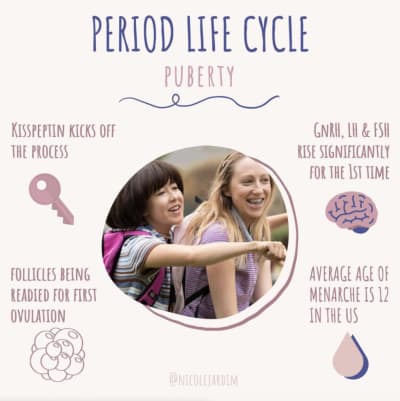
The story begins with menarche — your first period — which typically arrives somewhere between ages 12 and 13, though anywhere from age 8 to 16 is considered within the range of normal. Ideally, a girl will have her first period by age 15. If it hasn't arrived by then, that warrants a conversation with a healthcare provider to rule out primary amenorrhea or other underlying causes.
Menarche is triggered by a cascade that starts long before any blood appears. A neuropeptide called kisspeptin acts as the gatekeeper of puberty, stimulating the pulsatile release of gonadotropin-releasing hormone (GnRH) from the hypothalamus. GnRH signals the pituitary gland to release follicle-stimulating hormone (FSH) and luteinizing hormone (LH), which then prompt the ovaries to begin producing estrogen and progesterone. This is the same hormonal axis that will govern your cycle for the next several decades.
What's often overlooked is just how long the machinery has been in place. A girl is born with her maximum lifetime supply of primordial follicles already in her ovaries — this number only ever decreases from birth onward. By puberty, the pool is already significantly smaller than it was at birth. From that first cycle forward, follicles are continuously recruited, developed, and either ovulated or lost through a process called atresia.
Here's something worth knowing: it takes nearly a full year for a primordial follicle to develop into an ovulatory follicle. The egg released in any given cycle began its journey almost 365 days earlier. This timeline matters — it's why what you eat, how you sleep, and how much stress you carry has consequences that unfold months down the line, not just in the current cycle.
The Teenage Years: When Cycles Are Finding Their Footing
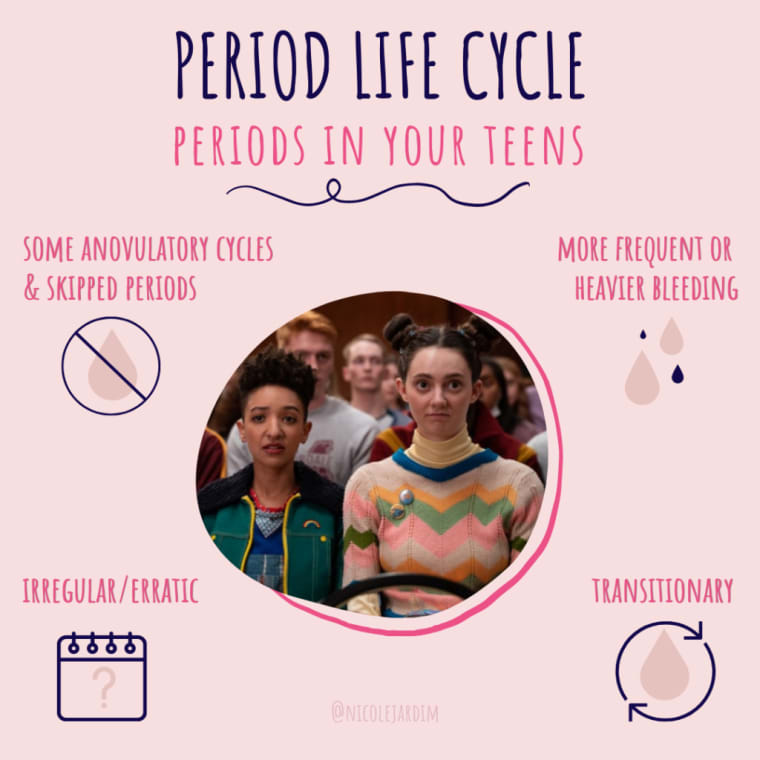
In the first five to seven years after menarche, cycles are genuinely meant to be a little erratic. A girl's reproductive system is transitioning from a completely anovulatory state to one of regular ovulation, and that adjustment takes time. Occasional anovulatory cycles, slower follicle development, and a smaller dominant follicle than adult women are all normal features of adolescent menstruation.
What does this look like in practice? Cycles anywhere from 21 to 35 days are considered normal for teens. Bleeding lasting two to seven days and blood loss of around 30–40 mL per cycle fall within the typical range. By the third year after menarche, around 60–80% of adolescents will have cycles between 21 and 34 days — a sign that the ovulatory rhythm is becoming more established. Ovarian maturation may not be truly complete until the mid-twenties.
Androgens are also naturally elevated during puberty because they drive the development of sexual organs and secondary sex characteristics. This is why acne, oily skin, and increased body hair are common during the teen years — these aren't necessarily signs of a hormonal disorder; they're part of normal development. What does warrant investigation is if any of these symptoms become extreme or persistent well beyond the teenage years.
One thing I want to be clear about: irregular or symptomatic teenage periods are frequently treated with hormonal birth control, but suppressing the reproductive axis during this critical window can interfere with the brain and bone development that depends on natural estrogen and progesterone production. A teenager's body is still growing into itself. Symptoms that persist beyond three months deserve investigation — not reflexive suppression.
Your Twenties: Building the Foundation
For most women, the late teens and early twenties mark the stabilization of the menstrual cycle. By now, the hormonal feedback loop — hypothalamus, pituitary, ovaries — is running more consistently, and cycles tend to normalize into a more predictable rhythm. This is the period of peak reproductive capacity, when the follicular pool is healthiest and ovulation is most robust.
That said, the twenties aren't without their hormonal challenges. Major life transitions — new jobs, relationships, moving, stress — affect cortisol, which in turn affects every hormone downstream. Women who enter this decade still dealing with unresolved symptoms from their teens often find those patterns intensify rather than resolve on their own.
The good news is that the body in its twenties is exceptionally responsive. Understanding what a healthy cycle actually looks like — and learning to track it — can make an enormous difference. The four phases of the menstrual cycle (menstruation, follicular, ovulatory, and luteal) are all windows into what's happening hormonally, and small changes to nutrition, sleep, and stress management often produce significant results quickly at this stage.
Pregnancy, if it occurs, represents its own profound hormonal chapter within this phase. After delivery, estrogen and progesterone — which were elevated throughout pregnancy — drop acutely within the first 24 hours once the placenta is delivered. For many women, postpartum periods are completely different from what they experienced before: heavier, more painful, or more irregular. This is real, it is common, and it is worth addressing rather than simply enduring.
Your Thirties: Hormonal Resilience Begins to Shift
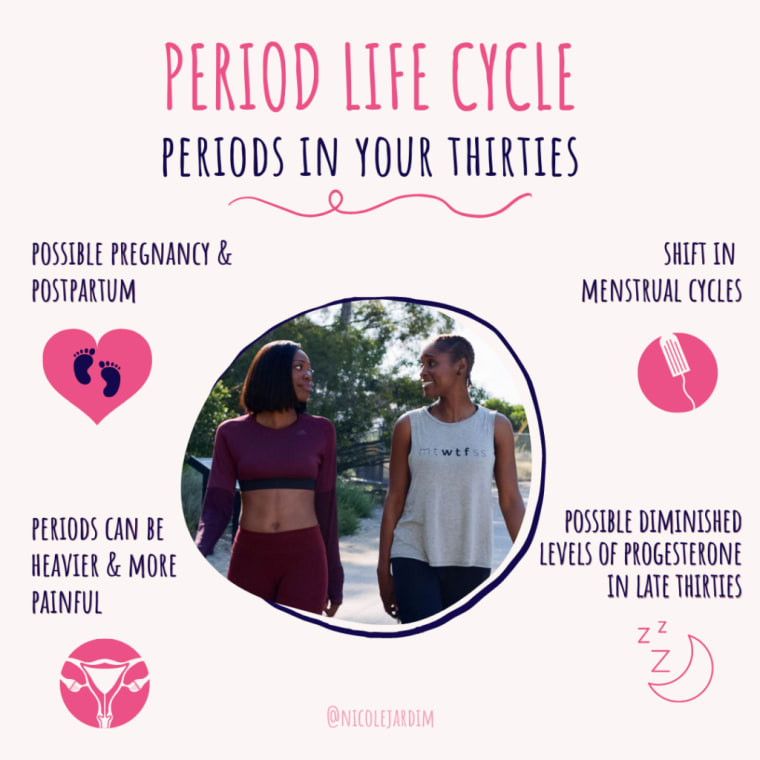
One of the most common things I hear from women in their early thirties is that something has changed — cycles are getting shorter, PMS is worse, periods are heavier, or symptoms they never had before are showing up. This is not imaginary. The thirties represent the beginning of a gradual shift in hormonal resilience.
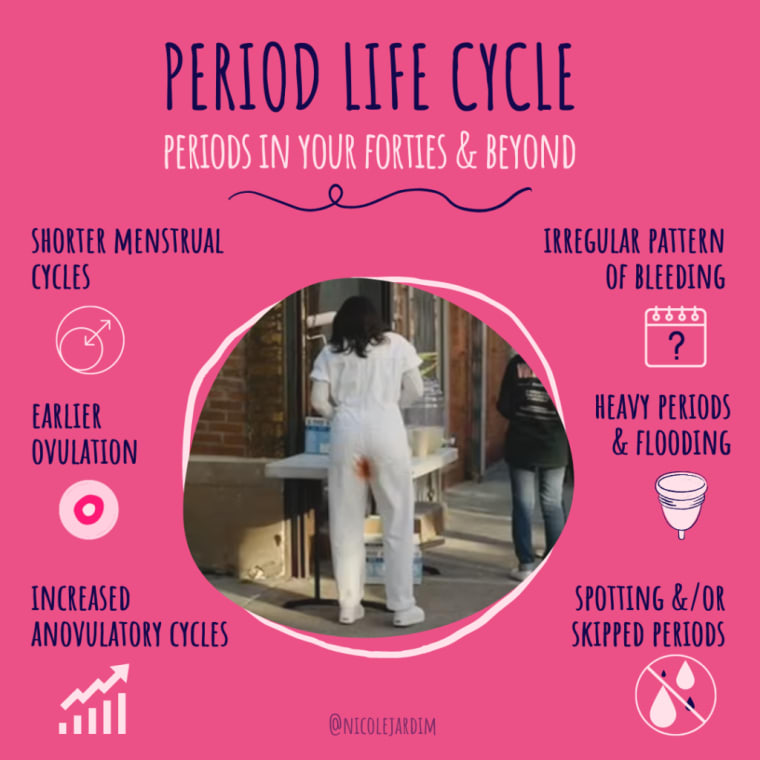
Cycles may begin to shorten slightly as the follicular phase compresses. Some women notice heavier bleeding or spotting they didn't have before. Others see lighter, shorter periods — sometimes a sign of anovulatory cycles, iron deficiency, or diminished ovarian reserve. Migraines, worsening PMS, and new-onset acne in the thirties are all patterns worth paying attention to, because they usually point to something that can be addressed.
Technically, perimenopause begins at 35 — but this doesn't mean symptoms immediately arrive on your thirty-fifth birthday. For most women in their mid-to-late thirties, what's actually happening is a subtle increase in anovulatory cycles each year. Without ovulation, the corpus luteum never forms — and without the corpus luteum, progesterone production drops. Even a few extra anovulatory cycles per year can begin to tip the estrogen-to-progesterone ratio. More on that below.
What the thirties also make clear is that our bodies are absorbing the cumulative effects of how we've lived. Chronic stress, undereating, disrupted sleep, and environmental exposures don't just wash through us — they leave marks in our hormonal landscape. The symptoms that emerge in this decade are often the body's way of communicating what it has been tolerating quietly for years. This is not cause for alarm. It is an invitation to pay closer attention.
Not sure what phase of your hormonal life you're in?
The free Hormone Health Assessment asks about your cycle, symptoms, and history to give you a personalized picture of what may be contributing to what you're experiencing — whether you're in your twenties, navigating your thirties, or starting to wonder about perimenopause.
Take the Free Assessment →Perimenopause: The Transition That Begins Long Before You Expect It
Perimenopause is the transitional decade leading up to the final period — and it is far more nuanced than the hot-flash narrative most of us grew up with. It unfolds in two distinct phases, each with its own hormonal signature, and understanding the difference can clarify a lot of confusing symptoms.
Phase One: Progesterone Drops First
The first hallmark of perimenopause isn't a drop in estrogen. It's a drop in progesterone. As ovulation becomes less frequent or less robust in the early forties, the corpus luteum — the small gland that forms after the egg is released and produces most of the body's progesterone — either forms inconsistently or produces less of the hormone than it once did.
This is a critical distinction. You can have perfectly adequate estrogen levels in early perimenopause while progesterone is quietly declining. The result is what's known as estrogen dominance — not necessarily too much estrogen in absolute terms, but too much relative to falling progesterone. Symptoms of this imbalance include heavy or flooding periods, worsening PMS, breast tenderness, sleep disruption, and mood changes — particularly anxiety and irritability in the week before the period.
Progesterone's role in the body extends far beyond reproductive function. It calms the nervous system, promotes deep sleep, supports thyroid function, and protects breast and bone health. When it declines, the entire body registers the loss. Changes to periods in perimenopause are often the first visible sign of this progesterone withdrawal — and they can begin years before most women would associate their symptoms with "the change."
In phase one, the luteal phase often shortens (from the typical 12–14 days down to 10 days or fewer), cycles may shorten to less than 25 days, and some months may be skipped entirely as anovulatory cycles become more frequent.
Phase Two: Estrogen Begins Its Decline
In the second phase of perimenopause, the brain intensifies its effort to stimulate the ovaries — releasing ever-higher levels of FSH and LH to try to produce a viable follicle. As the follicular pool diminishes and the ovaries become less responsive, estrogen production becomes erratic. It may surge dramatically and then crash, producing a confusing mix of symptoms: heavy bleeding and hot flashes in the same cycle, raging PMS followed by night sweats, or periods that go missing for months and then return.
Testosterone also fluctuates during perimenopause. It temporarily rises due to increased FSH stimulation, which can cause facial hair growth and hair thinning on the scalp — symptoms that catch many women completely off guard. Eventually testosterone also declines, contributing to fatigue, low libido, and reduced muscle mass.
As ovulation becomes increasingly rare, cycles lengthen and periods eventually become lighter, shorter, or just spotting. The body is winding down a system that has been running for decades, and it does so gradually.
Menopause and Beyond
Menopause is officially defined as twelve consecutive months without a period. It is a single moment in time — a threshold you cross, not a prolonged state. The years before that crossing are perimenopause; everything after is post-menopause.
Hormonally, menopause marks the near-complete cessation of ovarian progesterone and estradiol production. The adrenal glands take over as the primary source of both progesterone (in very small amounts) and the precursor hormones DHEA and androstenedione, which are converted to estrone — the estrogen dominant in post-menopause — through a process called aromatization, primarily in fat tissue.
This is why adrenal health matters so much going into menopause. If chronic stress, overwork, and sleep deprivation have taxed the adrenals throughout the reproductive years, there will be less reserve to draw on when the ovaries step back. The symptoms that often make menopause feel catastrophic — severe hot flashes, profound fatigue, major mood disruption — are frequently amplified by adrenal insufficiency, not just ovarian decline.
The shift from estradiol to estrone is a natural adaptation, not a failure. But the ratio of estrone to other hormones matters. Too much estrone (often driven by excess abdominal fat and insulin resistance) is associated with increased risk of breast and endometrial cancer in post-menopause. Too little is linked to intensified vasomotor symptoms, bone loss, and cardiovascular vulnerability. This is why post-menopausal health is not a passive state — the same foundations of nutrition, movement, sleep, and stress management that served you throughout the reproductive years become even more load-bearing now.
Supporting Your Hormones Through Every Phase
What is consistent across every stage of the menstrual life cycle is this: your body is not failing you. It is adapting — and it needs your support to do that well. The specifics shift by phase, but the fundamentals are universal.
Nutrient density: Every hormone in the body is built from raw materials. Protein (especially at breakfast) supports cortisol regulation and blood sugar stability. Healthy fats — from eggs, olive oil, fatty fish, and avocado — are the literal building blocks of steroid hormones including estrogen, progesterone, and testosterone. Iron and B12 matter for menstruating women of any age. Magnesium, zinc, and B6 support progesterone production and PMS relief across the board.
Blood sugar balance: Insulin has a direct relationship with sex hormones at every stage. In the teens, blood sugar instability worsens androgen-driven acne and irregular cycles. In the thirties, it compounds PMS and shortens cycles. In perimenopause and menopause, insulin resistance is one of the central mechanisms driving the most difficult symptoms — because declining estrogen and progesterone both had insulin-sensitizing effects, and losing them changes how the body handles glucose. Eating to keep blood sugar stable — prioritizing protein and fiber, reducing refined carbohydrates, not skipping meals — pays dividends across the entire lifespan.
Stress and the HPA axis: Cortisol does not exist in isolation. Chronic stress suppresses GnRH, which disrupts LH and FSH, which impairs ovulation, which drops progesterone. This chain reaction plays out identically whether you are sixteen or forty-six — the mechanism is the same; the consequences just compound over time. Stress and the menstrual cycle are inextricably linked, and any protocol that ignores stress management is incomplete.
Sleep: Progesterone promotes deep, restorative sleep. As it declines in perimenopause, sleep deteriorates — and poor sleep raises cortisol, which further disrupts hormonal balance. Protecting sleep becomes increasingly important as a woman moves through the later stages of her hormonal life.
Each Phase Is a New Season
There is a tendency in our culture to view the menstrual life cycle as a story of loss — a slow decline from the fertility of youth toward the inevitable diminishment of menopause. I reject that framing entirely. Each phase of a woman's hormonal life brings its own kind of intelligence, its own gifts, and its own demands.
The teen years are a time of awakening — chaotic, yes, but full of the raw energy of a body discovering itself. The reproductive years are a time of deepening self-knowledge, where the cycle becomes a reliable mirror for everything happening in your health and life. Perimenopause is an invitation to reckon honestly with what has been ignored or deferred, to build new foundations before the next chapter begins. And post-menopause, for many women, brings a kind of clarity and freedom that the hormonal fluctuations of the cycling years couldn't always allow.
Your cycle is not a nuisance to manage. It is a vital sign — one that speaks to your metabolic health, your stress response, your nutritional status, your immune function, and your neurological wellbeing. Understanding its four phases is the beginning of learning its language. Understanding the broader arc of the menstrual life cycle is how you learn to read the whole story.
Whatever stage you are in, the most important thing is this: you are not meant to simply endure it. You are meant to understand it.