If you've spent any time with me — in my programs, my book, or on this site — you've heard me say that sleep is one of the most powerful levers you can pull for your hormonal health. And yet it's almost always the last thing women prioritize. We'll spend money on supplements, track our cycles diligently, overhaul our diets, and still stay up scrolling until midnight and wonder why nothing is working.
Here's the truth: no supplement protocol, no dietary change, and no wellness routine can fully compensate for chronic sleep deprivation. Sleep is when your body does its deepest hormonal housekeeping. When you shortchange it, everything downstream suffers — your cortisol, your cycle, your mood, your energy, and your fertility.
This article covers the why behind sleep and hormones, followed by my favorite practical strategies and the specific supplements I recommend most often. A note on products: rather than pointing you to specific brands (which go in and out of stock, reformulate, or change ownership), I'll describe each supplement by type and give you dosing guidance. When shopping, look for high-quality, third-party tested versions — that certification tells you what's on the label is actually in the capsule, at the stated dose, without harmful contaminants.
Why Sleep Is the Foundation of Hormonal Health
Your body runs on a 24-hour internal clock called the circadian rhythm, and your hormones are exquisitely synchronized to it. Disrupt the clock — through poor sleep, irregular sleep timing, or artificial light exposure — and you disrupt the entire hormonal cascade that depends on it.
Here's what's happening hormonally while you sleep:
- Cortisol drops to its lowest point in the first half of the night, then begins its natural rise in the early morning hours to help you wake up alert. If your sleep is poor or fragmented, this rhythm breaks down — you wake up with cortisol that's already too high, or you drag through the day with a pattern that never resets properly.
- Melatonin peaks in the middle of the night and is directly involved in regulating your menstrual cycle. Melatonin receptors exist in the ovaries, and research suggests that melatonin supports egg quality and helps time the LH surge that triggers ovulation.
- Growth hormone is secreted in its largest pulse during deep sleep (slow-wave sleep). Growth hormone drives cellular repair, fat metabolism, and tissue regeneration — the kind of recovery that simply cannot happen during waking hours.
- Insulin sensitivity improves during adequate sleep. Even a few nights of poor sleep measurably reduces your cells' ability to respond to insulin — a major driver of blood sugar imbalance and the hormonal disruption that follows.
- Progesterone is protected. Because poor sleep elevates cortisol, and cortisol competes with progesterone at the receptor level (a concept sometimes called "cortisol steal"), chronically disrupted sleep can translate directly into lower functional progesterone — showing up as PMS, a shortened luteal phase, or spotting before your period.
The sleep-cycle connection runs in both directions: poor sleep drives up cortisol, elevated cortisol impairs ovulation and progesterone production, and low progesterone makes it harder to fall and stay asleep. It's a cycle that feeds itself. The good news is that interrupting it — even with small, consistent changes — has a measurable ripple effect throughout your hormonal system. You can read more about this dynamic in my articles on the cortisol connection and how stress affects your menstrual cycle.
Optimize Your Sleep Environment

Before we get to supplements, the single most impactful changes you can make are environmental. No pill can substitute for a room that's set up to support deep sleep.
Darkness
Your body needs complete darkness to produce melatonin optimally. Even small amounts of ambient light — from a streetlamp through thin curtains, a charging light on your phone, a nightlight in the hallway — are enough to blunt melatonin secretion. Invest in blackout curtains or wear a quality sleep mask. This is not a preference; it's a biological requirement.
Temperature
Core body temperature needs to drop by about 1–2 degrees Fahrenheit for you to fall and stay asleep. A cool room — most research suggests somewhere between 65 and 68°F (18–20°C) — facilitates this drop far more effectively than a warm one. If you run hot at night, which many women in the luteal phase or perimenopause do, a cooling mattress pad or breathable bedding can make a significant difference. Avoid hot baths right before bed; instead, take a warm bath 60–90 minutes before sleep, which triggers the rebound cooling effect that promotes drowsiness.
Quiet and EMF reduction
Electromagnetic fields from Wi-Fi routers, phones kept on the nightstand, and smart devices are a genuine sleep disruptor for many people. I recommend putting your phone in airplane mode or charging it outside the bedroom entirely. This also removes the temptation to check it during the night. If you're curious about the broader picture of EMF exposure and your cycle, see my article on EMFs and menstrual health.
Circadian Rhythm Support: The Morning and Evening Anchors
Your circadian clock is primarily set by light exposure. Two anchors matter most:
Morning light within 30–60 minutes of waking
Getting outside in natural light — even on a cloudy day — in the first hour after waking is one of the most powerful things you can do for sleep quality that night. Morning light hits specialized photoreceptors in your eyes and sends a "day has begun" signal to your brain's master clock, which sets the timer for your melatonin release roughly 14–16 hours later. Even five to ten minutes outside without sunglasses makes a measurable difference. This is completely free, and most people skip it entirely.
Dimming light in the evening
Your melatonin production begins when the light environment dims, typically around two hours before natural sleep time. Bright overhead lighting and screens in the evening delay this process. In practical terms: switch to warm, low lamps after sunset; use blue-light-blocking glasses if you need to use screens; and dim your phone screen to its lowest setting. Even better — put the screens away by 9 pm.
The Blue Light Problem
Blue-wavelength light (the spectrum emitted by LED lighting, phones, computers, and televisions) suppresses melatonin more powerfully than any other wavelength. Studies show that two hours of evening screen exposure can delay melatonin onset by up to 1.5 hours. This doesn't mean you need to live by candlelight, but it does mean your nightly scroll through social media is directly working against your hormones.
Practical steps: set your devices to auto-enable night mode (which shifts the display to warmer tones) at sunset; invest in a pair of amber-lensed blue light blocking glasses for evening wear; and if you watch television in the evening, sit far enough back that the screen doesn't dominate your visual field.
Caffeine, Alcohol, and Blood Sugar — The Three Sleep Saboteurs
Caffeine cutoff
Caffeine has a half-life of roughly five to six hours in most people — meaning half of a 2 pm coffee is still circulating in your system at 8 pm. For women with slower caffeine metabolism (a genetic variation in the CYP1A2 enzyme), it can be even longer. My general recommendation is to set a hard caffeine cutoff at noon or 1 pm at the latest. If you're currently struggling with sleep, try pushing it to 10 am for a few weeks and notice the difference.
Alcohol
Alcohol is probably the most underappreciated sleep disruptor in common use. It does help you fall asleep faster — but it fragments sleep architecture in the second half of the night, suppresses REM sleep (your emotionally and hormonally restorative sleep stage), and causes a cortisol rebound that wakes many people between 2 and 4 am. It also raises estrogen levels. If you're working on your hormones, even one drink in the evening can meaningfully degrade sleep quality. I'm not saying you can never drink — but if sleep is a problem, it's one of the first variables worth experimenting with.
Blood sugar and bedtime eating
Eating close to bedtime raises blood sugar and activates digestion, both of which can delay sleep onset. For most people, stopping eating two to three hours before bed is the sweet spot. That said, if you regularly wake between 2 and 4 am feeling alert or anxious with no clear reason, blood sugar instability may be the culprit — a drop in glucose can trigger a cortisol spike that wakes you. In that case, a small protein-fat snack before bed (a few bites of cheese, a spoonful of nut butter, or a handful of nuts) can stabilize blood sugar through the night. This is often a temporary strategy while you work on blood sugar regulation more broadly.
Is stress quietly disrupting your cycle?
Chronic stress and poor sleep are two of the most common hidden drivers of hormonal imbalance — and they're deeply connected. The free Hormone Health Assessment can help you identify which patterns in your cycle point to stress-related disruption, so you know exactly where to focus.
Take the Free Assessment →A Stress-Mitigation Bedtime Routine
Your nervous system needs a transition period between the stimulation of daily life and the restorative state required for sleep. This is especially true if you have an activated HPA axis — which many women with hormonal issues do. Building a consistent pre-sleep wind-down is one of the highest-leverage habits you can create.
A practical 60-minute bedtime routine might look like this:
- 60 minutes before bed: Finish eating; brew a cup of chamomile tea (chamomile contains apigenin, an antioxidant that binds to GABA receptors in the brain to promote relaxation); take any sleep-supportive supplements; dim the lights in your home.
- 45 minutes before bed: Step away from screens. Light stretching, gentle yoga, or a restorative practice is ideal — even 10 minutes of legs-up-the-wall can shift your nervous system toward parasympathetic (rest-and-digest) mode.
- 30 minutes before bed: A brief journaling practice — writing down tomorrow's to-do list or anything that's on your mind — can offload mental chatter so your brain isn't running loops when you lie down. Gratitude journaling has been shown in research to reduce pre-sleep arousal.
- 15 minutes before bed: Read a physical book (not a screen); practice slow nasal breathing (a 4-count inhale, 6-count exhale pattern activates the vagus nerve); and settle into bed in a cool, dark room.
Consistency matters as much as content. Doing the same sequence every night trains your nervous system to recognize the ritual as a sleep cue, making the transition faster and more reliable over time.
My Favorite Sleep Supplements — and How to Use Them
I want to be clear about the role supplements play here: they are supportive tools, not the foundation. Get the environment, the light exposure, the caffeine timing, and the wind-down routine working first. Then add supplements strategically to fill in the gaps. I also want to emphasize: always consult your healthcare provider before starting any supplement, particularly if you are pregnant, breastfeeding, or taking medications.
When you do go shopping, look for products that carry independent third-party testing certifications (such as NSF, USP, or Informed Sport). These certifications mean what's on the label is actually in the bottle, at the stated amount, without adulterants.
Magnesium Glycinate — the first supplement to try
Magnesium is my top recommendation for sleep, and I'd go so far as to say that magnesium deficiency is one of the most common and underappreciated drivers of poor sleep in women. Magnesium is required for the production of GABA (the brain's primary calming neurotransmitter), for the synthesis of melatonin, and for the regulation of cortisol. Low magnesium levels are associated with increased cortisol reactivity, lighter sleep, and more frequent nighttime waking.
The glycinate form binds magnesium to the amino acid glycine, which has its own calming and sleep-promoting properties. It is far better tolerated than magnesium citrate or oxide, which can cause loose stools. Dose: 200–400 mg of elemental magnesium glycinate taken 30–60 minutes before bed. Start at the lower end and increase gradually. You can read much more about magnesium's role across your cycle in my dedicated article on the benefits of magnesium for your health and cycle.
A useful pairing: mix a magnesium bicarbonate or glycinate powder into a few ounces of tart cherry juice about an hour before bed. Tart cherry is a natural dietary source of melatonin and has been shown in small studies to enhance both sleep duration and quality. It's a lovely pre-bed ritual on its own.
Ashwagandha — for stress-driven sleep disruption
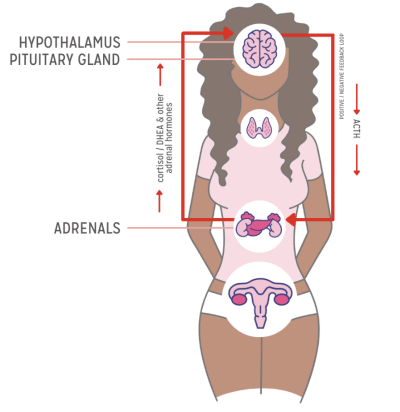
If your sleep trouble is driven primarily by an overactive stress response — racing thoughts, difficulty switching off, waking feeling wired — ashwagandha is worth considering. This Ayurvedic adaptogenic herb is well-studied for its ability to lower cortisol, reduce anxiety, and improve sleep quality, particularly in people with elevated stress. It works on the HPA axis to blunt the stress response over time rather than sedating you acutely.
Dose: Follow label directions on a high-quality standardized extract (look for products standardized to withanolide content). Ashwagandha can be taken in the morning for calm energy or in the evening if it tends to relax you. Experiment to find your timing. Important precautions: avoid ashwagandha if you have a nightshade sensitivity, a thyroid disorder, or are pregnant or breastfeeding. It can interact with immunosuppressant, anxiety, and thyroid medications — check with your doctor first.
Phosphatidylserine — for high nighttime cortisol
Phosphatidylserine (PS) is a phospholipid naturally found in brain cell membranes and is one of the most evidence-backed supplements for blunting an overactive HPA axis. It is particularly useful for people who experience a cortisol pattern that runs too high at night — resulting in difficulty falling asleep, a wired-but-tired feeling, or waking in the early hours of the morning. Research shows PS can reduce cortisol response to stress and support healthy cortisol rhythm when taken consistently. Dose: 100–300 mg taken in the evening.
L-Theanine — for a calm, alert transition to sleep
L-theanine is an amino acid found naturally in green tea. It promotes alpha brain wave activity — the same relaxed-but-alert state you experience during meditation — without causing sedation. It pairs exceptionally well with magnesium and is useful for the mental "buzzing" that keeps many women awake even when their body is tired. It does not cause grogginess the next morning. Dose: 100–200 mg taken 30–60 minutes before bed. L-theanine is also available in combination with GABA, which can be a useful pairing for anxious thoughts at bedtime.
Glycine — for deeper, cooler sleep
Glycine is a simple amino acid with a growing body of research supporting its use for sleep. It works in part by lowering core body temperature from the inside (mimicking the environmental cooling your bedroom should also be providing) and by acting on glycine receptors in the brain to reduce wakefulness. Studies show that 3 grams of glycine taken before bed improves subjective sleep quality, reduces daytime sleepiness, and shortens the time to reach restorative slow-wave sleep. Dose: 3 grams taken 30–60 minutes before bed. Glycine has an extremely safe profile and is also a component of collagen — so if you're already taking a collagen supplement in the evening, you may be getting some of this benefit.
Passionflower — for a gentle herbal option
Passionflower is a traditional botanical sleep aid with a mild anxiolytic (anti-anxiety) effect. It works by increasing GABA activity in the brain, similar to prescription sleep medications but via a much gentler mechanism and without the dependency risk. It's particularly useful for the kind of circular worried thoughts that make it hard to settle. Look for passionflower as a single-herb tincture or in a calming herbal blend that might also include valerian root, lemon balm, or skullcap. Dose: Follow product label directions, as concentration varies significantly between tinctures, capsules, and teas. Chamomile tea is a lighter option in the same category and makes a lovely nightly ritual in its own right.
Melatonin — use with caution and in low doses
Melatonin is the most widely used sleep supplement, but it is also the most widely misused. The high doses sold in many products (3 mg, 5 mg, 10 mg) far exceed what your body would ever produce naturally — your pineal gland secretes melatonin in the range of 0.1 to 0.3 mg. Taking supraphysiological doses is not simply more effective; it can actually delay melatonin's natural rhythm the following night, and there is reasonable evidence that large doses can interfere with ovulation.
If you use melatonin at all, I recommend using it for its intended purpose — circadian shifting, not sedation — and at the lowest effective dose. Dose: 0.5 mg taken 30–60 minutes before your target sleep time, particularly when adjusting to a new time zone or resetting a shifted sleep schedule. Do not rely on melatonin nightly as a stand-in for the lifestyle and environmental practices described above. The goal is to support your body in producing its own melatonin through a healthy circadian rhythm.
A Final Word: Consistency Over Perfection
None of this requires a perfect night every night. The research on sleep consistently shows that it's the chronic pattern — not the occasional late night — that damages hormonal health over time. Focus on building a sleep environment and wind-down routine you can actually maintain, add supplements thoughtfully as support tools rather than shortcuts, and give your body two to four weeks to begin responding. Most women notice meaningful improvements in energy, mood, and cycle regularity within a month of consistently prioritizing sleep. That's not a small thing. That's your body doing exactly what it's designed to do.